PPF vs. Ceramic vs. Bedliner for Off-Road Vehicles: What Actually Works in the Desert
By Anthony Verrelli, 18+ years in detailing and paint protection
Quick answer
For trail damage, PPF wins. Paint protection film physically absorbs pinstripes and gravel on the panels it covers. Ceramic coating doesn't stop scratches, but makes dust and mud easy to rinse and slows UV fade. Bedliner is toughest but permanent and changes the look. Most trail owners do best with partial PPF plus ceramic.
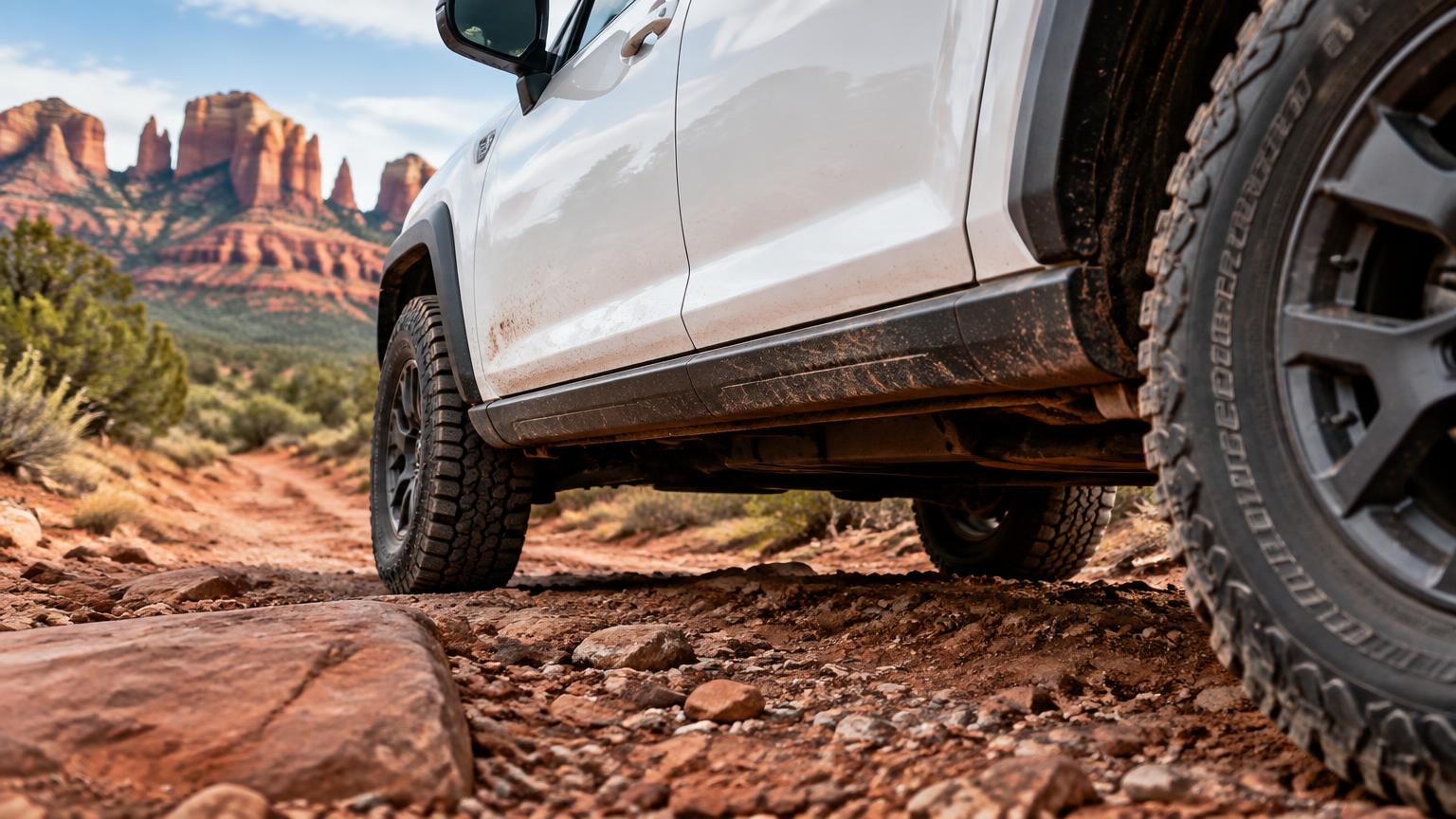
What's the honest comparison?
There's a lot of marketing in this space. Here's how the four real choices compare, without the hype. Cost tiers are relative, not quotes — real pricing depends on the vehicle and how much you cover.
| Option | Cost tier | Protection | Looks | Removable | Best for |
|---|---|---|---|---|---|
| Partial PPF | Medium | High against pinstripes, gravel and light rock chips on covered panels | Invisible; keeps factory finish | Yes, cleanly, when removed properly | Trail rigs that should still look factory |
| Ceramic coating | Medium | Low against scratches and chips; high for UV, dust and easy cleaning | Adds gloss and depth | Wears off over time; polishing removes it | Easier cleanup on every panel, on top of PPF |
| Bedliner / Raptor-style liner | Low to medium | Very high against impact and scraping | Textured, utilitarian; changes the look | No — effectively permanent | Hardcore builds, rock crawlers, work trucks |
| Do nothing | Low up front | None | Factory, until it isn't | — | Owners who plan to repaint or don't mind the patina |
What does PPF actually do on a trail rig?
Paint protection film is a thick, clear urethane layer bonded to the paint. When a branch drags along it or gravel hits it, the film takes the mark instead of your clear coat.
Quality film has a self-healing top layer. Light scratches soften and level out with heat. In Arizona that heat is free — a few hours in the sun, or warm water, often closes up light trail marks. Deep cuts won't heal, and a hard rock can still dent the panel underneath.
For off-road use, partial coverage makes the most sense: rocker panels, lower doors, fender flares, front bumper, hood leading edge and mirror caps. That's where brush and gravel actually hit. It's the only kind of PPF we install.
What does ceramic coating do — and not do?
Ceramic coating forms a hard, slick, water-repelling layer on the paint. It's excellent at a few things and close to useless at others.
What ceramic does well
- Dust, mud and red dirt release with a rinse instead of scrubbing.
- Slows UV fade and oxidation, which is a real issue in Arizona.
- Resists bird droppings, sap and hard water better than bare paint.
- Adds gloss and makes every wash faster.
What ceramic does NOT do
- It does not stop pinstripes from branches.
- It does not stop rock chips.
- It does not make paint scratch-proof, despite what some ads say.
Ceramic is the cleaning and UV layer. PPF is the impact layer. They work best together — ceramic can go right over the film. More detail on ceramic coating in Phoenix.
What are the tradeoffs of bedliner or Raptor-style liner?
Spray-on liner is very hard to damage. Brush, gravel and even rock rash barely mark it. For a dedicated crawler, it's a practical choice.
- Looks: Textured and matte. It changes the vehicle's character completely.
- Permanence: It doesn't come off cleanly. Assume it's there for good.
- Resale: Some buyers like it. Many don't. A factory-paint vehicle usually appeals to more people.
- Heat: Darker liners get very hot in the Arizona sun.
How does Arizona heat and UV affect each option?
PPF: Heat helps light scratches self-heal. Over years, intense UV ages any film, so quality matters. Cheaper films are more likely to yellow or crack. Keeping film clean and coated helps it last.
Ceramic: Handles heat well, but Arizona UV and abrasive dust wear it down faster than in milder climates. Expect to maintain it, and don't wash it in direct midday sun.
Bedliner: Very durable, but some liners fade or chalk in strong sun unless they're UV-stable.
Bare paint: Gets the worst of it. Scratches through the clear coat let UV attack the colour layer directly.
Pinstripe self-check: how do I know if trail scratches are fixable?
- Wash it. Dust hides scratches and fakes others. Use a proper two-bucket wash, not a dry wipe.
- Dry it fully. Water fills fine scratches and makes them disappear for a minute.
- Look in direct sun, or use a flashlight at a low angle. Move the light across the panel. Pinstripes show up as thin bright lines.
- Do the fingernail test. Drag a nail gently across the line. If it doesn't catch, the mark is usually in the clear coat and correctable by polishing. If it catches, it's likely deeper than the clear coat.
What about resale value?
Off-road vehicles hold value well, but condition still matters. Buyers look hard at rockers, doors and bumpers, because that's where trail use shows. Paint that's been protected under film usually looks far better than paint that's been out unprotected for the same number of seasons.
PPF can be removed before sale if the buyer wants it gone, leaving the paint underneath. Bedliner can't. Ceramic is neutral either way. None of this is a guarantee of a higher price, but a cleaner, original-looking vehicle is an easier sell.
Which combination is right for how I drive?
Weekend trail rig
Partial PPF on rockers, lower doors, flares, bumper, hood edge and mirrors. Ceramic over the whole vehicle. This covers the damage zones and makes cleanup after Broken Arrow or Bulldog Canyon quick.
Daily driver with occasional trails
Front-end PPF for highway chips plus the lower panels, ceramic everywhere, and windshield protection film if you spend a lot of time behind gravel trucks.
Hardcore overland or rock crawler
Bedliner on the panels that will see real rock contact may be the practical answer. PPF on the panels you want to keep looking original. Ceramic on the rest.
Already carrying trail scratches? Correct them before any film or coating goes on. See paint correction in Phoenix. We work at your home in Scottsdale, Cave Creek and North Phoenix.
Frequently asked questions
Is PPF worth it for off-road vehicles?
For owners who drive brushy trails and want the paint to stay original, yes. Partial PPF on the high-impact panels prevents most pinstriping and gravel damage.
Can I put ceramic coating over PPF?
Yes. Coating the film makes it easier to clean and helps protect it from UV and contamination.
Does ceramic coating protect against rock chips?
No. Ceramic coating is too thin to absorb impacts. Use paint protection film on chip-prone areas.
Is bedliner better than PPF for rocker panels?
Bedliner is tougher against heavy rock contact, but it's permanent and textured. PPF is clear and removable. Choose based on how hard you wheel and how you want the vehicle to look.
Does PPF really self-heal in Arizona heat?
Light scratches on quality self-healing film usually soften and disappear with heat. Deep cuts won't heal.
Will PPF yellow in the Arizona sun?
Lower-quality films are more prone to yellowing over time. Quality modern films resist it much better, and keeping the film clean and coated helps.
Should I correct my paint before adding PPF?
Yes. Film preserves whatever is underneath it, including scratches. Correct first, then protect.