How to Protect Your Jeep From Trail Scratches in Arizona
By Anthony Verrelli, 18+ years in detailing and paint protection
Quick answer
Put partial paint protection film on the panels that touch brush and gravel — rocker panels, lower doors, fender flares, front bumper, hood leading edge and mirror caps. Add ceramic coating on top so dust and mud rinse off. Wash properly after every trail so grit isn't scrubbed into the paint.
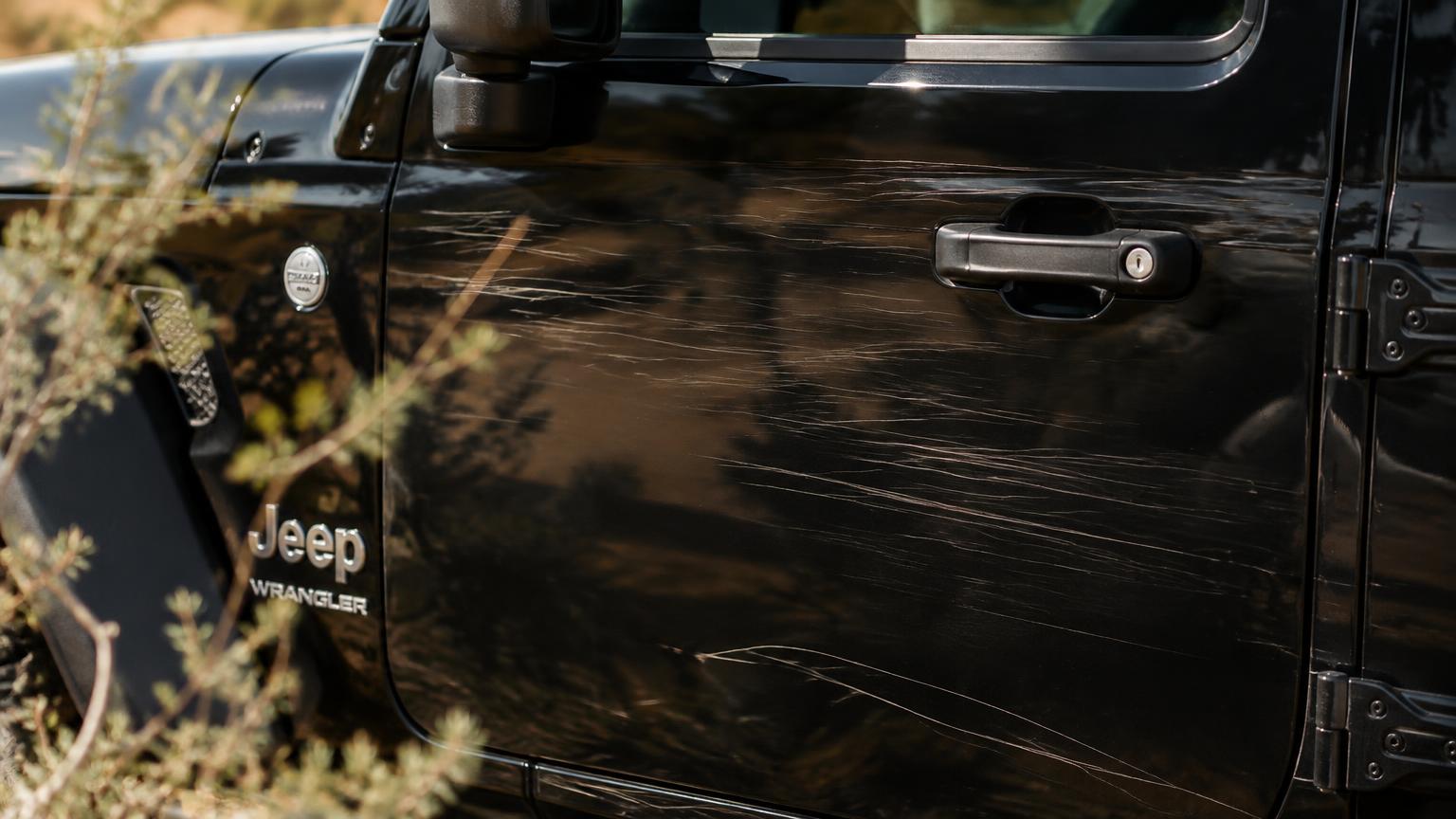
Why are Arizona trails so hard on Jeep paint?
Arizona trails are narrow and the brush is stiff. Mesquite, palo verde, catclaw acacia and creosote all grow right to the edge of the track. Their branches are thin, hard and dry. When a Jeep squeezes past, every branch drags across the paint like a scribe.
Catclaw is the worst of them. The name is accurate. It hooks, holds and pulls along the whole side of the vehicle.
Then there's the ground. Broken Arrow outside Sedona is red rock and loose gravel. Bulldog Canyon near Mesa has tight washes and brush on both sides. The roads out to Seven Springs and Bartlett Lake, north of Cave Creek, throw gravel at everything behind the front tires. Add fine desert dust that sits on every surface, and you have three kinds of damage on one trip: pinstripes, chips and abrasion.
Heat and UV make it worse. A scratch through the clear coat lets the sun go to work on the paint underneath. What starts as a thin line can fade and chalk faster here than almost anywhere.
Which panels on a Wrangler or Gladiator get damaged most?
After years of correcting trail rigs, the pattern is consistent. Damage concentrates low and at the corners.
- Rocker panels and lower doors — gravel spray from the front tires and brush at wheel height.
- Fender flares and the body just behind them — brush catches the edge and drags along.
- Front bumper — rock chips and branches head-on.
- Hood leading edge — chips from the vehicle in front on the drive out.
- Mirror caps — the widest point of the vehicle, so the first thing a branch finds.
- Upper doors and the Gladiator bed sides — on tight trails, brush reaches higher than you'd expect.
Roofs and the middle of the hood rarely take trail damage. They get sun damage instead. That matters when you decide where to spend.
What are the options, from cheapest to best?
Do nothing
Some owners accept the patina. That's a fair choice if you plan to wrap or repaint later. Just know that deep pinstripes that go through the clear coat can't be polished out.
Wax or sealant
Cheap and easy. It makes the surface slicker, so some brush slides off instead of digging in. It does very little against a real branch, and in Arizona heat it doesn't last long.
Bedliner or Raptor-style liner
Very tough. Also permanent, textured and a big change to how the Jeep looks. Great on a dedicated rock crawler. A hard sell on a clean daily driver, and it can affect resale.
Partial PPF plus ceramic coating
This is the sweet spot for most owners. Clear film goes only where the damage happens. Ceramic goes on top, and on the rest of the paint, for UV protection and easy cleaning. Your Jeep still looks factory.
| Option | Cost tier | Protection | Looks | Removable | Best for |
|---|---|---|---|---|---|
| Partial PPF | Medium | High against pinstripes, gravel and light rock chips on covered panels | Invisible; keeps factory finish | Yes, cleanly, when removed properly | Trail rigs that should still look factory |
| Ceramic coating | Medium | Low against scratches and chips; high for UV, dust and easy cleaning | Adds gloss and depth | Wears off over time; polishing removes it | Easier cleanup on every panel, on top of PPF |
| Bedliner / Raptor-style liner | Low to medium | Very high against impact and scraping | Textured, utilitarian; changes the look | No — effectively permanent | Hardcore builds, rock crawlers, work trucks |
| Do nothing | Low up front | None | Factory, until it isn't | — | Owners who plan to repaint or don't mind the patina |
Why is partial PPF the sweet spot for trail Jeeps?
Paint protection film is a thick, clear urethane layer. It takes the scratch so your paint doesn't. Light marks on quality film soften and fade with heat — and Arizona supplies plenty of heat.
Covering the whole vehicle is rarely necessary for a trail rig. The roof and upper hood aren't touching brush. Putting film on the rockers, lower doors, flares, bumper, hood edge and mirror caps protects the areas that take nearly all the trail damage, without paying to cover panels that don't. We only install partial PPF, so the advice is the same either way: film where it earns its place.
Film is not armour. A big rock or a hard tree strike can still dent the panel or cut the film. But for the constant brush and gravel of a normal Arizona trail day, it's the most effective option that keeps the paint looking original.
Why add ceramic coating on top?
Ceramic coating doesn't stop pinstripes. Anyone who tells you otherwise is selling something. What it does is make the surface slick and hydrophobic. Red Sedona dust and dried mud release with a rinse instead of needing to be scrubbed.
That matters, because scrubbing is how most swirls get put into trail vehicles. Less scrubbing, less damage. Ceramic also slows UV fade on every panel, film included. See ceramic coating in Phoenix for how it's applied and what to expect.
What's the right post-trail wash routine?
- Rinse first, and rinse a lot. Low pressure, lots of water. Get the loose dust and grit off before anything touches the paint.
- Pre-soak. A foam or pre-wash softens dried mud so it lifts instead of grinding.
- Two buckets, clean mitts. One for soap, one to rinse the mitt. Use a separate mitt for the lower panels.
- Work top to bottom. The lowest panels are the dirtiest. Do them last.
- Dry with clean towels or air. Never dry-wipe dust off the paint. That's the single biggest cause of swirls in Arizona.
- Wash early or late. Hot panels dry soap into spots. Morning is best in summer.
Pinstripe self-check: how do I know if trail scratches are fixable?
- Wash it. Dust hides scratches and fakes others. Use a proper two-bucket wash, not a dry wipe.
- Dry it fully. Water fills fine scratches and makes them disappear for a minute.
- Look in direct sun, or use a flashlight at a low angle. Move the light across the panel. Pinstripes show up as thin bright lines.
- Do the fingernail test. Drag a nail gently across the line. If it doesn't catch, the mark is usually in the clear coat and correctable by polishing. If it catches, it's likely deeper than the clear coat.
What if my Jeep is already scratched?
Most light trail marks live in the clear coat and can be removed by machine polishing. That's paint correction. Correct first, then protect — film over scratches just preserves the scratches. The full process is in our guide to desert pinstriping removal.
If you're in Cave Creek, North Phoenix or Scottsdale, the work is done at your home. No drop-off, no shop.
Frequently asked questions
Will PPF stop all trail scratches on a Jeep?
No. It stops the vast majority of brush pinstripes and gravel damage on the panels it covers. A hard strike from a rock or thick branch can still cut the film or dent the panel underneath.
Does ceramic coating protect a Jeep from scratches?
Not in any meaningful way against branches or rocks. Ceramic makes dust and mud easier to rinse off and slows UV fade. It works best on top of PPF, not instead of it.
Which Jeep panels should get PPF first?
Rocker panels, lower doors, fender flares, front bumper, hood leading edge and mirror caps. These take nearly all the trail and gravel damage on a Wrangler or Gladiator.
Can trail pinstripes on a Jeep be polished out?
Usually, yes, if they haven't gone through the clear coat. If your fingernail catches in the scratch, it's likely deeper and may need paint.
Is bedliner better than PPF for a Jeep?
Bedliner is tougher but permanent and textured, and it changes the look. PPF is clear, keeps the factory finish and can be removed. Most owners who still want a clean-looking Jeep choose PPF.
How soon after a trail should I wash my Jeep?
As soon as you reasonably can. Dust and sap sitting on hot paint does more harm the longer it stays. Rinse heavily first and never dry-wipe the dust off.