One-Step Paint Correction for Used Cars: Is It Worth It?
By Anthony Verrelli, 18+ years in detailing and paint protection
Quick answer
For most used cars, yes. A one-step paint correction is a single machine-polishing stage that removes many light swirls, haze and water-spot marks and restores gloss, while taking off very little clear coat. It won't remove deep scratches, rock chips or clear-coat failure — those need more.
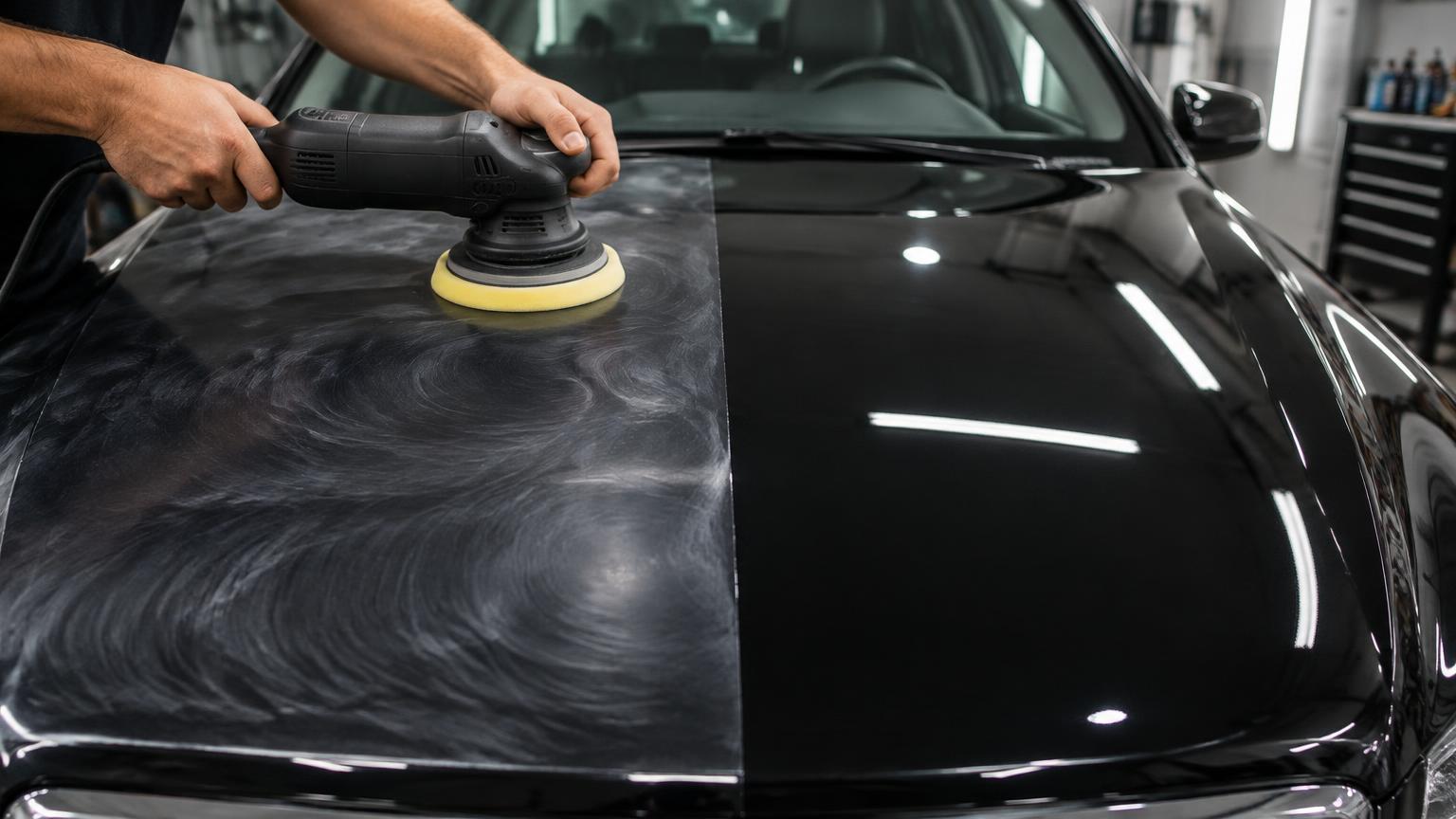
What is one-step paint correction?
It's a single stage of machine polishing, using one pad and polish combination chosen to balance cutting power and finish. One pass across the car. It levels light defects in the clear coat and leaves the paint glossy.
A quick note on wording: we say one-step, not "single-stage". Single-stage describes a type of paint with no separate clear coat. They're different things.
One-step vs. multi-step correction: what's the difference?
- One-step: one polishing stage. Removes many light defects and restores gloss. Removes the least clear coat. Faster.
- Multi-step: a heavier compounding stage to cut deeper defects, followed by one or more finer polishing stages to refine the finish. Removes more defects, takes longer and removes more clear coat.
Multi-step isn't automatically better. It's the right tool when the paint needs it — dark, neglected or high-value cars where the owner wants the closest thing to flawless.
What does a one-step realistically fix?
Usually improves or removes
- Light swirls from automatic car washes and poor hand washing.
- Haze and dullness.
- Many water-spot marks that haven't etched deeply.
- Light marring from towels and dusters.
Won't remove
- Deep scratches — if your fingernail catches, it's likely too deep.
- Rock chips, where paint is missing.
- Clear-coat failure — peeling, flaking or cloudy patches.
- Deeply etched water spots or bird-dropping etching.
To be straight about limits: a one-step paint correction improves gloss and removes many light defects. It does not remove deep scratches, clear-coat failure or rock chips. Those need multi-step correction or paint work. And ceramic coating doesn't stop chips or scratches — it adds gloss, UV and chemical resistance, and makes washing easier.
Why does paint depth matter?
Clear coat is thin. Every polish removes a small amount of it, and it doesn't grow back. Once it's too thin, the paint can't be safely corrected again — and in Arizona sun, thin clear coat fails faster.
That's why we measure paint thickness before polishing and don't over-polish. A used car may already have been polished by previous owners or a body shop. The goal is the best result with the least material removed, leaving clear coat in reserve for the future.
Why are most used cars ideal for a one-step?
Most used cars in average condition have the same problem: a layer of light swirls and haze from years of washing, plus some water spotting. That's exactly what a one-step targets.
The result is usually a big visual jump for a reasonable amount of work. The car looks crisp and glossy again, and the clear coat isn't thinned more than necessary.
Where do used-car swirls come from?
- Automatic car washes — brushes and cloth strips drag grit across the paint.
- Previous owners' washing — one bucket, a gritty sponge, circular wiping.
- Dry-wiping dust — a habit that's especially damaging with Arizona dust.
- Dealer quick polishes done with the wrong pad or rushed.
Off-road owners may also have left trail pinstriping — see desert pinstriping removal.
Should paint correction come before ceramic coating?
Always. Coating locks in what's underneath, defects included. Correct first, then coat — see ceramic coating a used car. And decontamination comes before correction, so the pad doesn't grind iron and tar into the paint.
Here's where correction sits in the New-to-You Reset:
- Full exterior decontamination — iron fallout remover, tar removal and clay treatment.
- One-step paint correction — a single machine-polishing stage to remove most light swirls, haze and water-spot marks and restore gloss.
- Ceramic coating to lock in the result.
- Full interior detail.
- Optional ozone treatment if the cabin holds odours from the previous owner.
| Option | Cost tier | What it fixes | Gloss | How long it holds up | Best for |
|---|---|---|---|---|---|
| Do nothing | Low | Nothing; contamination and swirls stay | As bought | Paint keeps ageing in the sun | Cars you plan to sell on quickly |
| Wash & wax | Low | Surface dirt only; fills some swirls briefly | Short-term shine | Washes away quickly in Arizona heat | A quick tidy-up |
| One-step correction + ceramic | Medium | Removes many light swirls, haze and water-spot marks, then protects | Strong, clear gloss | Coating keeps the corrected finish easier to maintain | Most used cars in average condition |
| Multi-step correction + ceramic | High | Removes more and deeper defects, then protects | Highest clarity | Same coating benefits on a more refined finish | Dark, neglected or high-value cars |
How much paint correction do I need?
It depends on the car, its colour and what you want. A quick rule: if the car looks good from a few steps back but swirly up close in the sun, a one-step is usually right. If it has deeper scratches you want gone, or it's a dark car you want as close to perfect as possible, multi-step may be worth it. A test spot on the paint answers the question better than any guess.
What's on the first-week-of-ownership checklist?
- Book the reset before you settle in. Doing it in the first week means you only pay to fix the previous owner's wear once.
- Don't take it through an automatic wash. Brushes add the swirls you're about to pay to remove.
- Look closely at the paint in direct sun: swirls, haze, water spots, orange specks on light colours.
- Check the cabin: under the seats, seat rails, vents, headliner, and how it smells after sitting in the heat.
- Replace the cabin air filter if there's no record of when it was last done.
- Note anything the reset can't fix — rock chips, deep scratches, failing clear coat — so you can plan for them.
- Park in shade or a garage while you wait, to slow further sun damage.
More on paint correction in Phoenix and ceramic coating in Phoenix. We come to your home or office in Scottsdale, Paradise Valley, North Phoenix, Deer Valley and Cave Creek.
Frequently asked questions
What is a one-step paint correction?
A single machine-polishing stage that removes many light defects such as swirls, haze and water-spot marks, and restores gloss.
Is one-step the same as single-stage?
No. Single-stage describes a type of paint with no separate clear coat. One-step describes a correction with one polishing stage.
Will one-step paint correction remove scratches?
It removes many light scratches and swirls. It won't remove deep scratches, rock chips or clear-coat failure.
When do I need multi-step correction?
When there are deeper defects you want removed, or on dark or high-value cars where the goal is the most refined finish.
Does paint correction thin the clear coat?
Yes, slightly. That's why paint thickness is measured and we don't polish more than needed.
Should I correct paint before ceramic coating?
Yes. Coating locks in whatever is underneath, so correction always comes first.