What Are the Orange Dots on My Car? Iron Fallout & Rail Dust Explained
By Anthony Verrelli, 18+ years in detailing and paint protection
Quick answer
They're usually iron fallout: tiny particles from brake dust or rail dust that embed in the paint and rust. They show most on white and light colours, and they won't wash off. An iron remover dissolves them — it turns purple or red as it reacts. Don't scrub them.
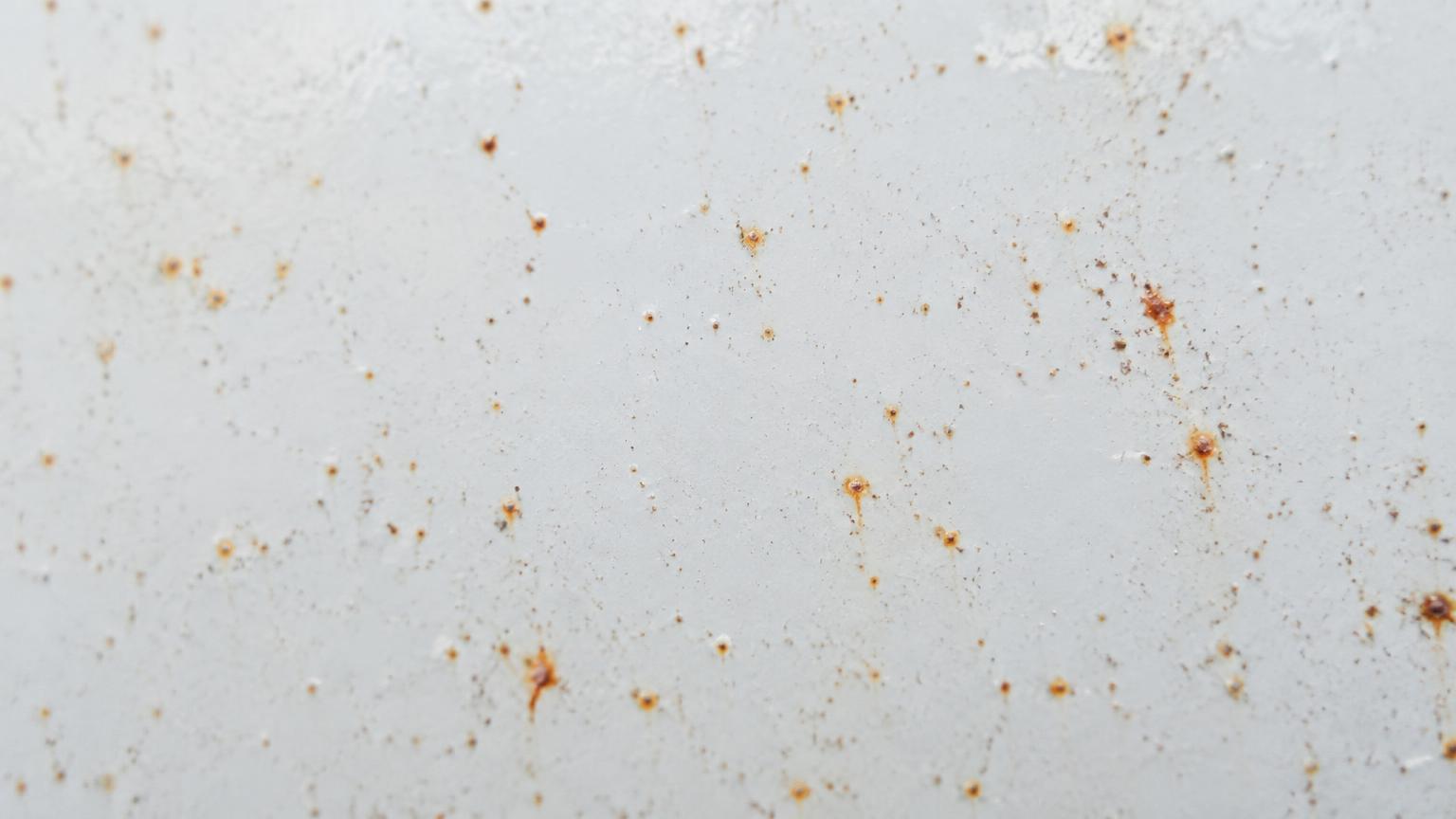
What are the orange specks on my car?
Look closely at a white or silver car and you'll often see them: tiny orange, rusty-yellow or brown dots, scattered across the paint. They're usually thickest on the lower panels, the back of the car and around the wheels.
They're iron. Microscopic metal particles that land on the paint, bond into the surface and then rust. A normal wash doesn't touch them.
Where does iron fallout come from?
Brake dust
Every time you brake, pads and rotors shed fine metal particles. Hot particles land on the wheels and lower body, and some of them bond to the paint. Your own car does it, and so does every car around you in traffic.
Rail dust
Cars shipped by rail pick up metal particles from the rails and wheels along the way. That's why it's common on new cars and on used cars brought in from out of state. A lot of cars in Arizona arrived from somewhere else.
Industrial and construction areas
Parking near rail lines, industrial yards or metalwork adds more.
Why is it worse on white and light paint?
It isn't necessarily worse — it's just visible. On black or dark paint the same particles are there, but you feel them more than you see them. On white, the orange stands out.
How can I check my car for iron fallout?
- Wash and dry the car. Work on clean, cool paint.
- Look closely at a light-coloured panel in good light — especially low on the doors, behind the wheels and the rear bumper.
- Do the plastic-bag test. Put your hand inside a thin plastic sandwich bag and glide it gently across the clean paint. The bag makes you more sensitive. Smooth paint feels like glass. Contaminated paint feels gritty or like fine sandpaper.
- Compare panels. Try the roof, then the lower door. The difference is usually obvious.
Rough paint after washing is the giveaway. If it's rough after a proper wash, there's something bonded to it.
How does iron remover work?
An iron remover is a spray that reacts chemically with iron particles and dissolves them so they can be rinsed away. As it reacts, it changes colour — usually purple or deep red. The more iron there is, the more it 'bleeds'.
It's applied to clean, cool paint, left to dwell for the time the product specifies, then rinsed thoroughly. It's not something to use in direct Arizona sun or on hot panels.
Why shouldn't I scrub the dots off?
Because they're hard particles, and scrubbing drags them across the paint. You'll create scratches and swirls around every speck, and you won't get most of them out anyway — they're bonded in.
Harsh compounds or rubbing by hand do the same. Chemical first, then clay, then polishing if needed.
What about tar and other contamination?
Iron is one part of it. Road tar shows up as black spots on the lower panels and needs a tar remover. After both, a clay treatment pulls out whatever's left — overspray, sap residue, bonded grime. Together those three are a full exterior decontamination.
Why must decontamination come before correction and coating?
Before correction: if particles are still in the paint, the polishing pad picks them up and grinds them across the surface. You'd be adding scratches while trying to remove them.
Before coating: ceramic coating bonds to the paint and locks in whatever's there. Coat over iron and tar, and you've sealed them in. The coating also bonds best to a truly clean surface.
That's why it's step one of the New-to-You Reset:
- Full exterior decontamination — iron fallout remover, tar removal and clay treatment.
- One-step paint correction — a single machine-polishing stage to remove most light swirls, haze and water-spot marks and restore gloss.
- Ceramic coating to lock in the result.
- Full interior detail.
- Optional ozone treatment if the cabin holds odours from the previous owner.
To be straight about limits: a one-step paint correction improves gloss and removes many light defects. It does not remove deep scratches, clear-coat failure or rock chips. Those need multi-step correction or paint work. And ceramic coating doesn't stop chips or scratches — it adds gloss, UV and chemical resistance, and makes washing easier.
| Option | Cost tier | What it fixes | Gloss | How long it holds up | Best for |
|---|---|---|---|---|---|
| Do nothing | Low | Nothing; contamination and swirls stay | As bought | Paint keeps ageing in the sun | Cars you plan to sell on quickly |
| Wash & wax | Low | Surface dirt only; fills some swirls briefly | Short-term shine | Washes away quickly in Arizona heat | A quick tidy-up |
| One-step correction + ceramic | Medium | Removes many light swirls, haze and water-spot marks, then protects | Strong, clear gloss | Coating keeps the corrected finish easier to maintain | Most used cars in average condition |
| Multi-step correction + ceramic | High | Removes more and deeper defects, then protects | Highest clarity | Same coating benefits on a more refined finish | Dark, neglected or high-value cars |
What's on the first-week-of-ownership checklist?
- Book the reset before you settle in. Doing it in the first week means you only pay to fix the previous owner's wear once.
- Don't take it through an automatic wash. Brushes add the swirls you're about to pay to remove.
- Look closely at the paint in direct sun: swirls, haze, water spots, orange specks on light colours.
- Check the cabin: under the seats, seat rails, vents, headliner, and how it smells after sitting in the heat.
- Replace the cabin air filter if there's no record of when it was last done.
- Note anything the reset can't fix — rock chips, deep scratches, failing clear coat — so you can plan for them.
- Park in shade or a garage while you wait, to slow further sun damage.
Will iron fallout come back?
Yes, gradually. Brake dust never stops. A coated car is easier to keep clean, and an iron remover used occasionally during maintenance washes keeps it from building up again.
Next steps: one-step paint correction after decontamination, then ceramic coating in Phoenix. More on paint correction in Phoenix. We come to your home or office in Scottsdale, Paradise Valley, North Phoenix, Deer Valley and Cave Creek.
Frequently asked questions
What are the orange dots on my white car?
Usually iron fallout: brake dust or rail dust particles that embed in the paint and rust.
Why is my paint rough after washing?
Bonded contamination such as iron, tar or overspray. A wash can't remove it; decontamination and clay can.
How do I remove iron fallout?
Use an iron remover on clean, cool paint, let it dwell, rinse thoroughly, then clay. Don't scrub.
Why does iron remover turn purple?
It reacts chemically with iron particles as it dissolves them. The colour change shows where iron is present.
Is rail dust common on used cars?
It's common on cars shipped by rail, including many brought in from out of state.
Should I decontaminate before ceramic coating?
Yes. Coating locks in whatever is on the paint, and decontamination must come before correction too.