Just Bought a Used Car? How to Make It Feel Brand New
By Anthony Verrelli, 18+ years in detailing and paint protection
Quick answer
Reset it once, properly, right after purchase. Decontaminate the paint (iron remover, tar removal, clay), do a one-step paint correction to remove most light swirls and haze, lock it in with ceramic coating, and give the interior a full detail. Add ozone if the previous owner's smell lingers.
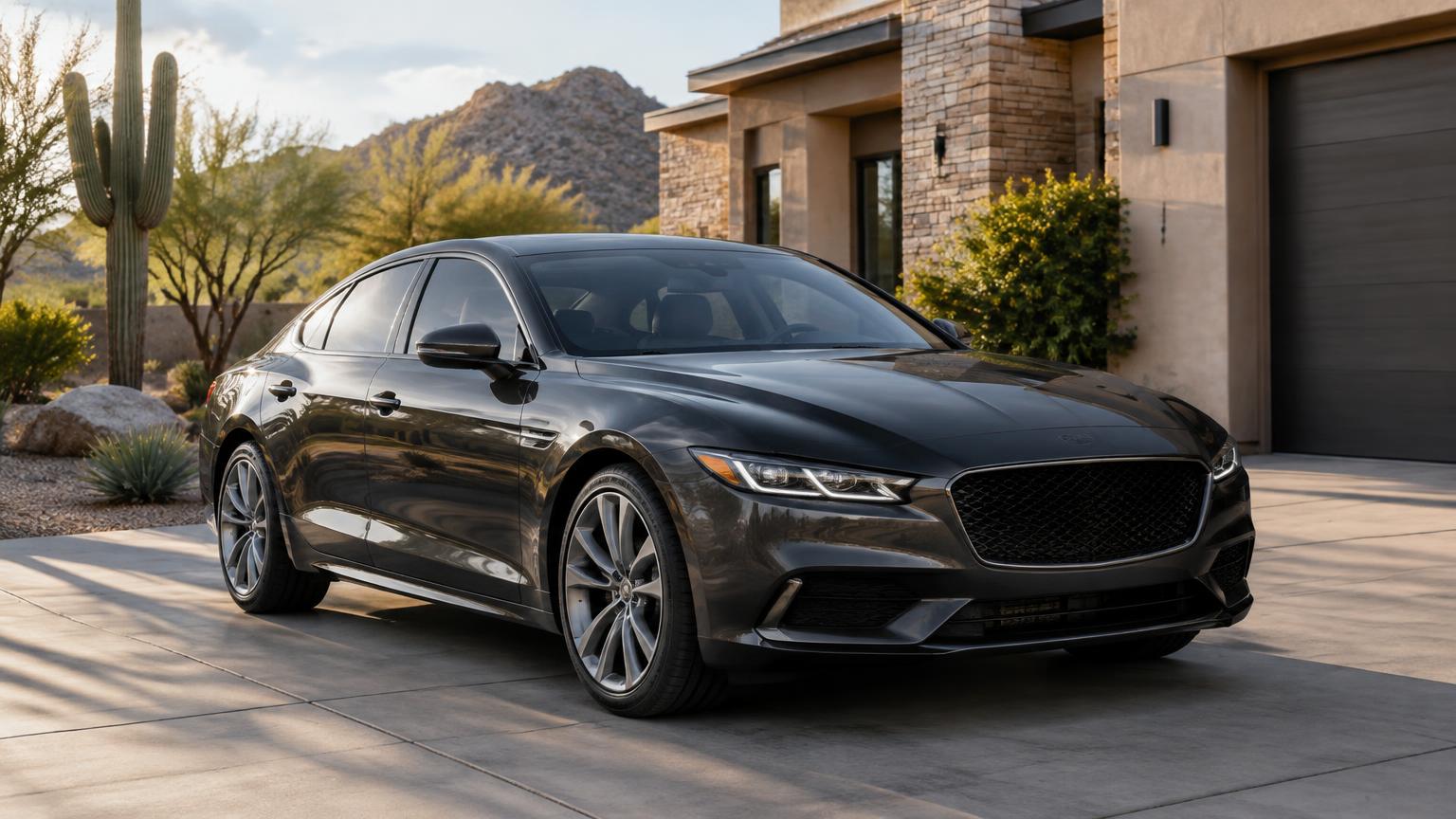
Why doesn't a used car feel like yours?
Because it's still carrying someone else's life. Years of their washes, their parking spots, their coffee, their pets, their air freshener.
On the outside, that shows up as swirls from automatic car washes, haze, water spots, and tiny orange specks of embedded iron. On the inside, it's grime in the seat rails, dust in the vents, worn-looking leather and a smell you can't quite name — one that gets stronger when the car sits in the Arizona sun.
None of that is your wear. But it's yours now.
What is the New-to-You Reset?
It's one visit, right after purchase, that clears out the previous owner and protects the result. Five parts:
- Full exterior decontamination — iron fallout remover, tar removal and clay treatment.
- One-step paint correction — a single machine-polishing stage to remove most light swirls, haze and water-spot marks and restore gloss.
- Ceramic coating to lock in the result.
- Full interior detail.
- Optional ozone treatment if the cabin holds odours from the previous owner.
The order matters. Contamination comes off before polishing, or the polisher grinds it into the paint. Correction comes before coating, because coating locks in whatever is underneath. The interior is cleaned before ozone, because ozone doesn't remove the source of a smell.
What happens at each step?
1. Exterior decontamination
A wash only removes what's sitting on the paint. Decontamination removes what's stuck in it. An iron remover dissolves embedded brake dust and rail dust — it changes colour as it works. Tar remover takes off road tar. Then a clay treatment pulls out what's left, so the paint feels smooth as glass. More on this in what the orange dots on your car are.
2. One-step paint correction
A single machine-polishing stage. It removes most light swirls, haze and water-spot marks, and brings back gloss. For most used cars in average condition, it's the right amount — enough to transform the finish without taking off more clear coat than needed. See one-step paint correction for used cars.
3. Ceramic coating
Coating goes on the freshly corrected paint. It adds gloss, UV and chemical resistance, and makes washing easier — all useful against Arizona sun and hard water. Gtechniq is our preferred brand. More at ceramic coating in Phoenix.
4. Full interior detail
Vacuum, steam cleaning, hot-water extraction of carpets and cloth seats, vents, headliner spot cleaning, leather cleaning and conditioning, and UV protection for the dash and trim. High-touch areas get sanitized.
5. Optional ozone treatment
If smoke, pet or previous-owner smells remain after cleaning, ozone neutralizes them. The car stays empty during treatment and is aired out afterwards.
To be straight about limits: a one-step paint correction improves gloss and removes many light defects. It does not remove deep scratches, clear-coat failure or rock chips. Those need multi-step correction or paint work. And ceramic coating doesn't stop chips or scratches — it adds gloss, UV and chemical resistance, and makes washing easier.
Didn't the dealer already detail it?
Probably — but dealer reconditioning detailing is usually a quick shine to get the car on the lot. A wash, a fast polish or glaze that fills swirls for a few weeks, tyre shine, a vacuum and a fragrance.
That isn't the same as correction. Fillers wash out, and the swirls come back. Decontamination often gets skipped. Interiors get a surface clean, not extraction. It looks good under showroom lights. It's not a reset.
Does it matter if I bought privately or from a dealer?
A little. Private-sale cars usually haven't been touched at all. You see the real condition — which is useful, because you know exactly what you're dealing with. Expect more contamination and a more lived-in interior.
Dealer cars often look better on day one, but some of that is fillers and fragrance. Give it a few washes and the true condition shows. Either way, the reset is the same; only the amount of work changes.
| Option | Cost tier | What it fixes | Gloss | How long it holds up | Best for |
|---|---|---|---|---|---|
| Do nothing | Low | Nothing; contamination and swirls stay | As bought | Paint keeps ageing in the sun | Cars you plan to sell on quickly |
| Wash & wax | Low | Surface dirt only; fills some swirls briefly | Short-term shine | Washes away quickly in Arizona heat | A quick tidy-up |
| One-step correction + ceramic | Medium | Removes many light swirls, haze and water-spot marks, then protects | Strong, clear gloss | Coating keeps the corrected finish easier to maintain | Most used cars in average condition |
| Multi-step correction + ceramic | High | Removes more and deeper defects, then protects | Highest clarity | Same coating benefits on a more refined finish | Dark, neglected or high-value cars |
What's on the first-week-of-ownership checklist?
- Book the reset before you settle in. Doing it in the first week means you only pay to fix the previous owner's wear once.
- Don't take it through an automatic wash. Brushes add the swirls you're about to pay to remove.
- Look closely at the paint in direct sun: swirls, haze, water spots, orange specks on light colours.
- Check the cabin: under the seats, seat rails, vents, headliner, and how it smells after sitting in the heat.
- Replace the cabin air filter if there's no record of when it was last done.
- Note anything the reset can't fix — rock chips, deep scratches, failing clear coat — so you can plan for them.
- Park in shade or a garage while you wait, to slow further sun damage.
Why do it in the first week?
Because every week you wait, Arizona keeps working on the car. Sun keeps drying the dash and leather. Hard water keeps spotting the paint. Automatic washes keep adding swirls. Do it once, early, and you start ownership on a clean slate — and you only pay to undo the previous owner, not yourself as well.
If the car has trail scratches from a previous off-road owner, see desert pinstriping removal and paint correction in Phoenix. We come to your home or office in Scottsdale, Paradise Valley, North Phoenix, Deer Valley and Cave Creek.
Frequently asked questions
How do I make a used car feel new?
Decontaminate the paint, do a one-step paint correction, add ceramic coating, and give the interior a full detail. Add ozone treatment if odours remain.
Should I detail a used car right after buying it?
Yes. Doing it in the first week means you only pay to remove the previous owner's wear once, before Arizona sun and washes add more.
Isn't the dealer's detail enough?
Usually not. Dealer recon detailing is typically a quick shine with fillers that wash out, not a true correction or deep interior clean.
Will a one-step correction remove all scratches?
No. It removes many light swirls, haze and water-spot marks. Deep scratches, rock chips and clear-coat failure need multi-step correction or paint work.
Do I need ozone treatment?
Only if smells remain after the interior is deep-cleaned. Ozone neutralizes odour but doesn't remove the source, so cleaning comes first.
Which ceramic coating do you use?
Gtechniq is our preferred brand.