How to Stop Headlights From Yellowing Again: Ceramic Coating & PPF
By Anthony Verrelli, 18+ years in detailing and paint protection
Quick answer
Protect the lens from UV after it's restored, or from day one on a new car. A UV-protective clear replaces the factory coat. Ceramic coating adds a slick, UV- and chemical-resistant layer. Headlight PPF adds a physical film that also takes rock chips. Park in shade and hand wash to help any of them last.
Why do headlights yellow again after restoration?
Restoration removes the failed factory UV coat. From that point, the lens is only as protected as whatever goes on next. Leave it bare and Arizona sun goes straight to work on the polycarbonate. That's why the protection step matters more than any other. More on this in why DIY restorations fade.
What's the difference between headlight PPF, ceramic coating and UV clear?
UV-protective clear
A clear coating designed for polycarbonate, applied after restoration to replace the factory hard coat. It's the minimum for any restored lens. On its own it's thin, so it still benefits from sensible parking and washing.
Ceramic coating
A thin, hard, slick layer that bonds to the lens surface. It adds UV and chemical resistance, and dust and bugs wash off more easily. It doesn't stop rock chips. Gtechniq is our preferred brand. If the car is being coated anyway, coating the lenses at the same time is easy. See ceramic coating in Phoenix.
Headlight PPF (clear bra)
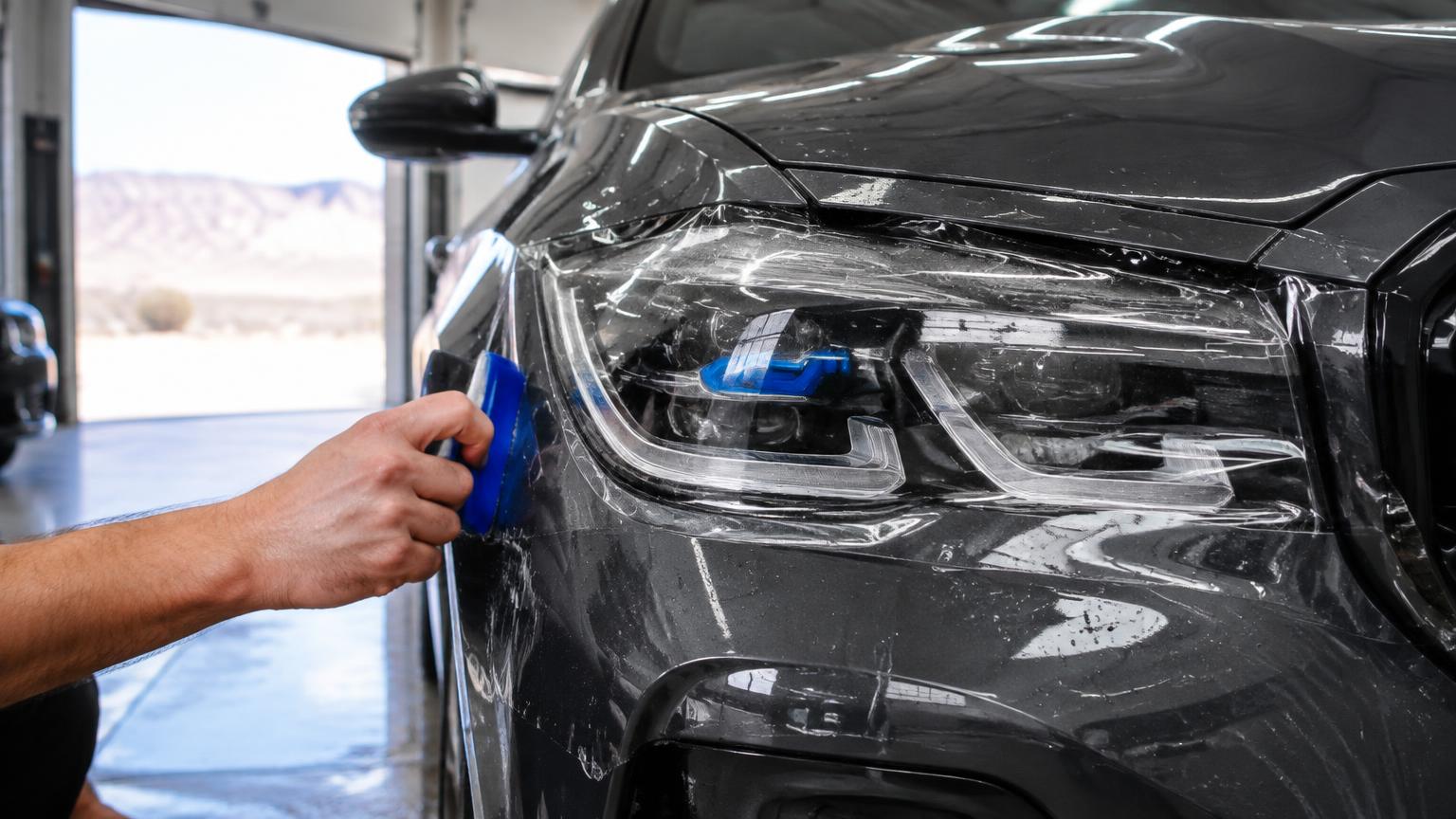
Paint protection film cut to the shape of the headlight. It's a physical layer, much thicker than any coating, so it takes the UV, the sand-blasting and the rock chips instead of the lens. When it eventually wears, the film can be removed and replaced. The lens underneath has been protected the whole time.
How do headlight protection options compare?
| Option | Cost tier | UV protection | Chip protection | Removable | Best for |
|---|---|---|---|---|---|
| Nothing | Low | None after restoration | None | — | Not recommended in Arizona |
| UV-protective clear | Low | Replaces the factory coat | None | No | Every restored lens, as a minimum |
| Ceramic coating | Medium | Added UV and chemical resistance | None | Wears off gradually | Cars being coated anyway; easy cleaning |
| Headlight PPF | Medium | Physical film over the lens | Yes | Yes, replaceable | Highway and trail driving; cars you keep |
| PPF + ceramic coating | High | Film plus slick top layer | Yes | Film is replaceable | Best overall protection |
Should I protect brand-new headlights?
Yes, and new is the best time. A new car's lenses still have a perfect factory coat. Protecting them from day one means that coat lasts much longer, and you may never need restoration at all.
Modern LED and matrix headlight assemblies on many newer cars are expensive to replace. A film over the lens is cheap insurance by comparison. If you're having PPF fitted to the front of a new car, add the headlights to the package.
Can headlight PPF stop rock chips?
That's one of its main jobs. Highway driving on the Loop 101 or I-17 throws gravel at the front of the car constantly. Trail driving adds sand and stones. Coatings don't stop chips. Film absorbs the impact so the lens doesn't pit.
If you drive off-road, the headlights are only part of it. See PPF vs. ceramic vs. bedliner for off-road vehicles for the panels that take the most damage.
Can PPF go on yellow headlights?
It shouldn't. Film over a yellowed lens just seals the yellow in. The lens needs to be restored first, then protected. Check whether your lenses can be restored with the self-check below.
Headlight self-check: can my headlights be restored?
- Clean the lens first. Wash it and dry it. Dust and road film make a lens look worse than it is.
- Find where the haze is. Look at the lens at an angle in daylight. If the haze looks like it's on the surface, it's usually the outside. If you can see fog, droplets or a film on the inside wall, it's inside the housing.
- Feel it. Run a clean fingertip across the lens. A rough, chalky or sandpaper feel means the outer hard coat has failed. That's what restoration fixes.
- Check the top. Yellow patches heaviest on the top or sun-facing side point to UV damage on the outside of the lens.
- Look for moisture. Water droplets or condensation inside the lens, especially after a wash or a cool morning, mean a seal has failed. Polishing the outside won't fix that.
- Look for cracks and chips. Cracks through the lens or broken mounting tabs need repair or replacement, not restoration.
To be straight about limits: restoration only fixes the outside of the lens. Haze or moisture inside the housing, cracks, and failed seals mean the housing needs repair or replacement. A good detailer will tell you that before starting, not after.
How do I maintain protected headlights?
- Hand wash. Gentle washing with a clean mitt. Skip brushed automatic washes, which wear coatings and scuff film edges.
- Rinse dust before wiping. Dry-wiping desert dust drags grit across the lens.
- Avoid harsh chemicals. Strong degreasers and bug removers can shorten the life of coatings.
- Clean bugs promptly. Bug residue bakes on in summer heat.
- Don't pressure-wash film edges up close. Keep the nozzle back from PPF edges.
- Park in shade when you can. Less UV means everything lasts longer.
- Check it occasionally. Look for lifting film edges, chips or haze returning, and have it looked at early.
What about the rest of the car?
Headlights rarely age alone. The paint, trim and interior have had the same sun. Lens protection makes most sense as part of protecting the front of the car properly.
If my headlights are yellow, is my paint damaged too?
Often, yes. The same sun that broke down the headlight's hard coat has been working on the clear coat, the black trim and the dashboard for just as long. Headlights simply show it first, because polycarbonate yellows where paint tends to fade, dull and haze more quietly.
So while the lenses are being done, it's worth looking at the hood and roof in direct sun. Dull patches, light swirls and faded trim are common on cars that have yellow headlights. That's where paint correction and ceramic coating come in. More detail in how the Phoenix sun damages car paint.
Just bought a pre-owned car with tired headlights? That's usually a sign the whole car needs a reset. See how to make a used car feel new in Arizona. And if there are light marks around the lenses from a previous DIY attempt, see scratch removal.
We work in your driveway or at your office in Scottsdale, Paradise Valley, North Phoenix and Cave Creek. No drop-off, no ride to arrange.
Frequently asked questions
How do I stop headlights from yellowing?
Keep them protected from UV with a UV-protective clear, ceramic coating or headlight PPF, park in shade where possible, and hand wash instead of using brushed automatic washes.
Is headlight PPF worth it?
For cars you plan to keep, or cars driven on highways and trails, yes. It blocks UV and absorbs rock chips, and the film can be replaced when it wears.
Can you ceramic coat headlights?
Yes. Ceramic coating adds UV and chemical resistance and makes lenses easier to clean, but it doesn't stop rock chips.
Should I put PPF on new headlights?
Yes. Protecting new lenses from day one helps the factory UV coat last and protects expensive modern headlight assemblies from chips.
Can PPF go on yellow headlights?
It shouldn't. Film would seal the yellowing in. Restore the lens first, then protect it.
Which ceramic coating do you use?
Gtechniq is our preferred brand.