Can-Am Maverick, Commander & Defender: Paint Protection for Desert Riding
By Anthony Verrelli, 18+ years in detailing and paint protection
Quick answer
For desert riding, yes — on the glossy panels and graphics that take brush, roost and sand: hood, front fenders, doors and rear flares. Ceramic-coat the textured plastics, wheels and everything else for UV and easy cleaning. Work machines like the Defender usually need more coating and less film.
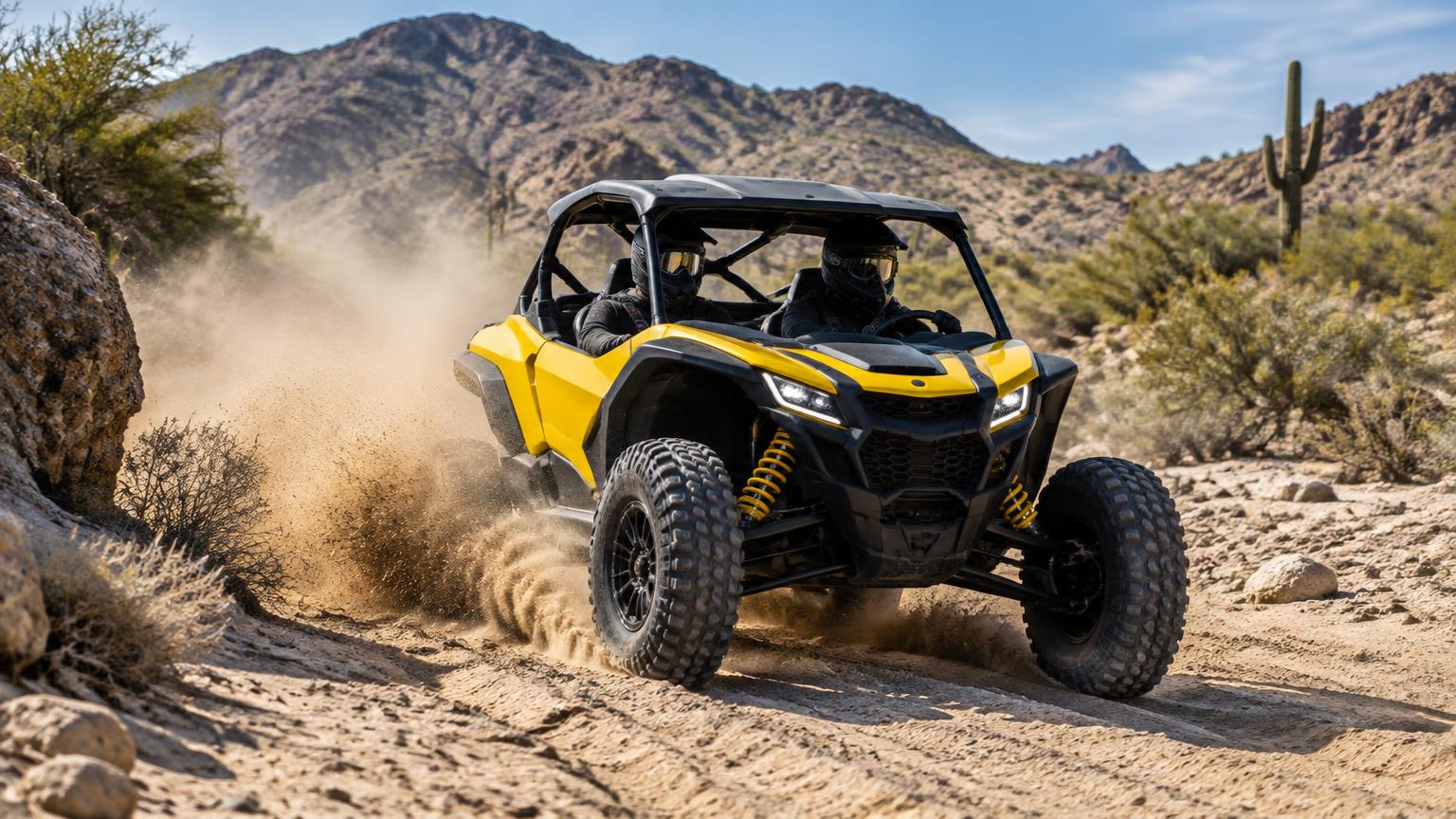
Can-Am is used descriptively. AVOTTO isn't a dealer and has no manufacturer partnership. This is general guidance — your machine gets assessed in person.
Maverick vs. Commander vs. Defender: how do protection needs differ?
Maverick — sport
A Maverick is built for speed, which means more roost, more sand and more brush at pace. The hood, front fenders and doors take the most. Film on the glossy panels and graphics is the priority.
Commander — crossover
A Commander splits time between trails and utility. Film the most exposed glossy panels, ceramic-coat everything, and pay attention to the cargo area and lower panels that see gear and grit.
Defender — work
A Defender working a property sees sun, dust, mud and tools more than tight trails. UV and grime are the main threats. Ceramic coating on paint, plastics and wheels does the heavy lifting; film goes only where things rub or hit.
Is protection different for dunes vs. rocky trails?
Yes. They damage a machine in different ways.
- Dunes and sand washes sandblast forward-facing surfaces. Fine abrasion dulls the hood, front fenders and windshield over time. Film on the front end and careful polycarbonate care matter most.
- Rocky, brushy trails — Crown King, Table Mesa, Bulldog Canyon — mean pinstriping down the sides, roost to the hood, and the odd hard hit low down. Film on doors and flares as well as the front.
Most Arizona riders do some of both, so the plan usually covers both.
How do you protect Can-Am graphics and plastics from UV?
Arizona sun fades graphics and turns textured black plastics grey. A machine parked outside between rides gets it worse.
- Glossy graphic panels: clear film keeps them from fading and scratching. Ceramic on top makes them easy to clean.
- Textured plastics: a ceramic or trim coating helps hold colour and resists chalking.
- Storage: shade or a cover between rides helps any protection last longer.
| Option | Cost tier | Protection | Looks | Removable | Best for |
|---|---|---|---|---|---|
| Ceramic coating | Low to medium | UV, chemicals, easy cleaning. No impact protection | Deeper gloss on paint; richer look on plastics | Wears off over time | Every panel, plastics, wheels; on top of film |
| PPF (partial) | Medium to high | Physical layer against brush, roost and light chips | Clear; keeps factory paint and graphics | Yes, when removed properly | Smooth or glossy panels that take the hits |
| Wrap | Medium to high | Some scratch protection; thinner than PPF | Changes colour or graphics | Yes, when removed properly | Owners who want a new look |
| Do nothing | Low up front | None | Factory, until it fades and scratches | — | Machines you plan to refresh or replace soon |
Be clear on what each layer does. Ceramic coating does not stop rock chips, dents, gouges or deep scratches. It resists UV and chemicals, makes cleaning easier and keeps gloss. Paint protection film is the physical-impact layer. That's why the two are often used together.
What should I protect on a brand-new Can-Am?
The day the machine arrives is the cheapest and best time. The finish is perfect, nothing needs correcting, and protection lasts longest when it goes on a flawless surface.
Day-one protection checklist
- Contact us before delivery so protection is scheduled the week the machine arrives, at your home or shop.
- Hold off on the first ride until it's done.
- Film glossy impact panels and graphics — hood, front fenders, doors and rear flares.
- Ceramic-coat everything else — paint, film, textured plastics, wheels.
- Assess the windshield and roof. Polycarbonate scratches easily; film is decided per machine.
- Plan for sand. If you ride dunes, front-end coverage matters most.
How do I handle Arizona heat after a ride?
A machine that's just come off a summer trail is hot — panels, engine and exhaust. Washing it straight away with cold water spots the paint and plastics, and the heat dries soap before you can rinse it.
Let it cool in the shade first. Then rinse heavily and wash in sections, rinsing each one before it dries. Early morning or evening washes are easier in summer.
Heat also matters for protection itself. Film and coatings are installed in controlled conditions, not in direct midday sun. That's part of why booking it for delivery week, at your home or shop, works well — it's planned, not squeezed in between rides.
Dune riders should also check air intakes and filters after a sandy day. That isn't a paint issue, but it's part of looking after the machine properly.
One more heat point: dark plastics and black graphics get hottest in direct sun. They're also the first to chalk. Coating them and parking in shade does more for them than any cleaner you can buy afterwards. If the machine is stored on a trailer outside, a fitted cover between rides is worth it.
How should I wash a Can-Am after the desert?
- Rinse first, heavily. Get wash sand and dust off before anything touches the body.
- Pressure washer with care. Keep distance from film and wrap edges, electrical connectors and bearings. Never blast straight at seams.
- Soft mitt, pH-neutral soap. Separate mitt for the lower panels.
- Polycarbonate windshield and roof: plenty of water, mild soap, soft microfiber. No ammonia cleaners, no dry wiping.
- Dry with clean towels or air. Never wipe dust off dry — that's how plastics and paint get hazy.
Sand and brush already left marks? Glossy panels can often be corrected — see paint correction in Phoenix and desert pinstriping removal. For the full comparison of options, read PPF vs. ceramic vs. bedliner, and see ceramic coating in Phoenix. Also: Honda, Kawasaki, Yamaha and CFMOTO guide. We come to you in Cave Creek, Scottsdale and North Phoenix.
Frequently asked questions
Is PPF worth it on a Can-Am Maverick?
For desert riders, usually yes. Film on glossy panels and graphics protects against brush, roost and sand abrasion.
Does sand damage side-by-side paint?
Yes. Blowing sand slowly dulls forward-facing panels and polycarbonate windshields. Film on the front end helps most.
Does a Can-Am Defender need PPF?
Usually less than a Maverick. Work use is mainly sun and grime, so ceramic coating does most of the work, with film where things rub or hit.
How do I stop Can-Am plastics fading?
Ceramic or trim coating on textured plastics, film over glossy graphic panels, and shade or a cover between rides.
Does ceramic coating stop chips on a Maverick?
No. Ceramic doesn't stop chips, dents, gouges or deep scratches. PPF is the impact layer.
When should I protect a new Can-Am?
The week you take delivery. Contact us before it arrives and we'll schedule protection on-site that week.