New Side-by-Side? Protect It Before the First Ride
By Anthony Verrelli, 18+ years in detailing and paint protection
Quick answer
Protect it the week you take delivery, before the first ride. Put paint protection film on smooth or glossy panels that take brush and roost — doors, hood, front and rear fenders, bed sides. Ceramic-coat everything else, including textured plastics and wheels. Treat polycarbonate windshields gently: no ammonia, no dry wiping.
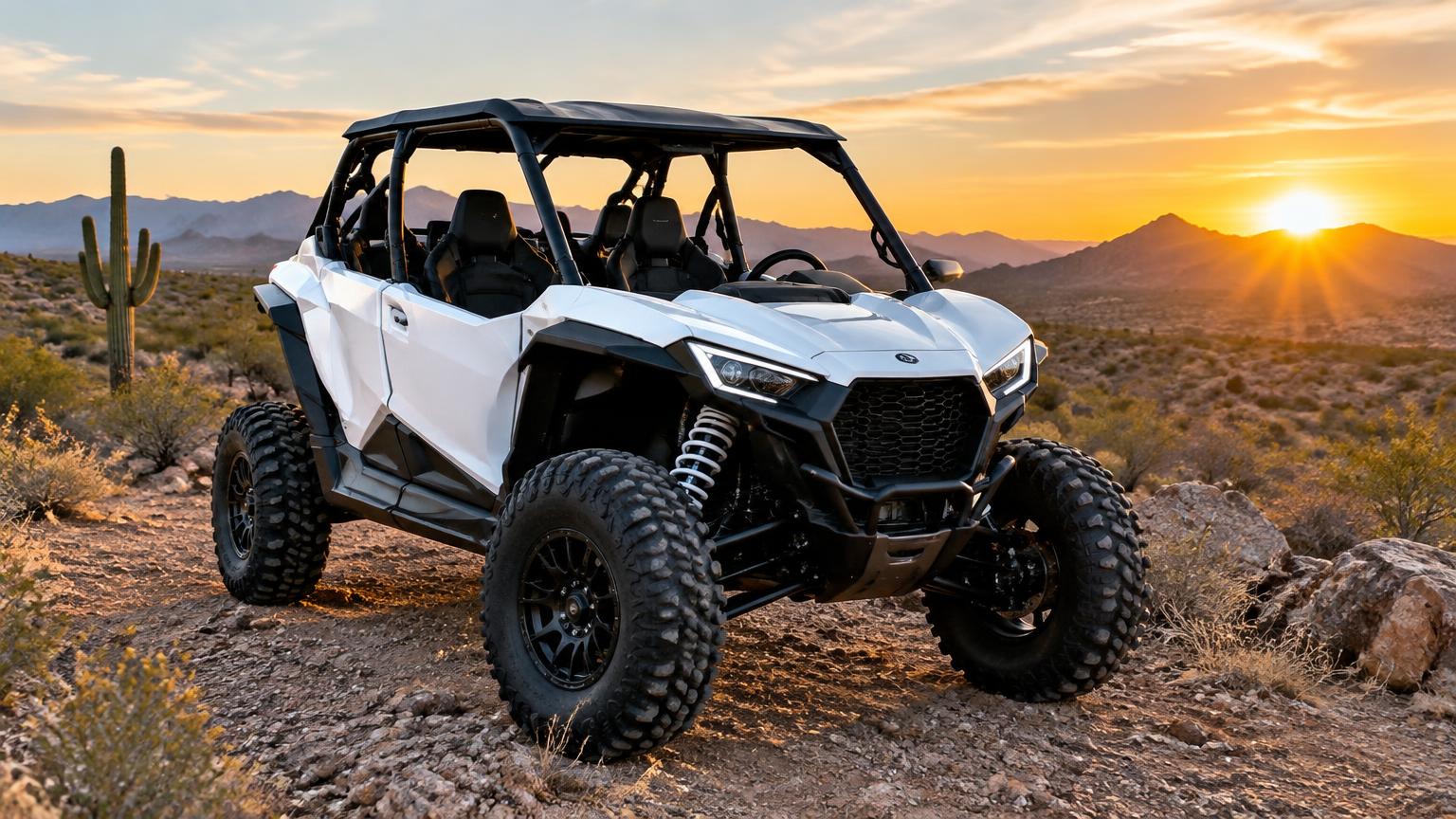
Why does side-by-side damage start on the first ride?
A side-by-side lives where cars don't. On the first run out to Table Mesa, Box Canyon or Sycamore Creek, the machine meets everything at once: brush, roost from the lead machine, wash sand and fine dust.
Mesquite, palo verde, catclaw and creosote line the narrow sections. Cholla is worse — it breaks off and sticks. Every branch that drags along the doors leaves a line. Every rock thrown by the machine ahead hits the hood and front fenders.
Then there's the sun. Plastics and graphics fade in Arizona UV, and a machine parked outside between rides takes the full dose. Heat makes it worse.
None of this waits until you've owned it a while. That's why day one matters.
Why is delivery day the best time to protect?
On delivery day the finish is as good as it will ever be. No fade to correct. No scratches to polish out first. Protection goes straight on.
That means the least work, the lowest cost, and protection that gets the full benefit of a perfect surface. Wait a season, and the job starts with fixing fading, scratches and oxidation before anything can be protected. Film and coatings lock in whatever is underneath.
Which panels on a side-by-side take the most damage?
- Doors — the widest flat surface at brush height. Pinstriping shows here first.
- Hood — roost and stones from the machine ahead, plus sun from above.
- Front fenders — debris from your own front tires, and brush at the corners.
- Rear fenders and flares — the widest point at the back; brush catches the edge.
- Bed sides — on machines with a bed, long flat panels right where branches reach.
The exact layout depends on the machine and how you ride. A tight trail rider and a dune rider see damage in different places.
Are side-by-side panels plastic or painted, and does it matter?
It matters a lot. Most side-by-side bodies are plastic. Some panels are painted or glossy; many are textured, unpainted plastic.
- Smooth or glossy panels — painted or not — suit paint protection film. The film bonds well and stays clear.
- Textured plastics don't suit film. They get a ceramic or trim coating instead, which helps hold colour against UV and makes dust easier to clean.
- Factory graphics on glossy panels can be protected under film, which keeps them from fading and scratching.
| Option | Cost tier | Protection | Looks | Removable | Best for |
|---|---|---|---|---|---|
| Ceramic coating | Low to medium | UV, chemicals, easy cleaning. No impact protection | Deeper gloss on paint; richer look on plastics | Wears off over time | Every panel, plastics, wheels; on top of film |
| PPF (partial) | Medium to high | Physical layer against brush, roost and light chips | Clear; keeps factory paint and graphics | Yes, when removed properly | Smooth or glossy panels that take the hits |
| Wrap | Medium to high | Some scratch protection; thinner than PPF | Changes colour or graphics | Yes, when removed properly | Owners who want a new look |
| Do nothing | Low up front | None | Factory, until it fades and scratches | — | Machines you plan to refresh or replace soon |
Be clear on what each layer does. Ceramic coating does not stop rock chips, dents, gouges or deep scratches. It resists UV and chemicals, makes cleaning easier and keeps gloss. Paint protection film is the physical-impact layer. That's why the two are often used together.
How should I care for a polycarbonate windshield and roof?
Many side-by-side windshields and roofs are polycarbonate, not glass. Polycarbonate is tough against impact but scratches easily.
- No ammonia-based glass cleaners. They can cloud or damage polycarbonate.
- No dry wiping. Desert dust on a dry cloth is sandpaper.
- Plenty of water, mild soap and a clean, soft microfiber.
- Protective film is an option for some windshields and roofs. It's assessed per machine — fit, shape and material all matter.
What's on the day-one protection checklist?
Here's what to do the week you take delivery.
- Contact us before delivery. Tell us the machine and the delivery date, and we'll schedule protection that same week, at your home or shop.
- Don't ride it first. Even one trail day adds scratches that need correcting before film goes on.
- Inspect it. Note any transport marks or dealer-prep swirls on glossy panels.
- Film the impact zones. Doors, hood, front and rear fenders, bed sides — wherever the panels are smooth enough.
- Ceramic-coat the rest. Paint, film, textured plastics and wheels.
- Decide on windshield and roof film. Assessed on your machine.
- Set up your wash routine before the first ride, so the first clean-up is done right.
Should I store my side-by-side differently in Arizona?
Storage does as much for a machine as anything applied to it. A side-by-side parked in the sun between rides is losing colour every day, whatever protection it has.
Garage or shade is best. If neither is available, a breathable cover that fits properly helps. Make sure the machine is clean before covering it, though — a cover flapping over dusty panels in the wind can scuff them. Let the engine and exhaust cool first.
Between longer gaps, give it a rinse to get trail dust off. Fine dust sitting on plastics in the heat is what turns them chalky.
What's the right post-ride wash routine?
- Rinse first, heavily. Get wash sand and dust off before anything touches the body.
- Pressure washer with care. Keep distance from film and wrap edges, electrical connectors and bearings. Never blast straight at seams.
- Soft mitt, pH-neutral soap. Separate mitt for the lower panels.
- Polycarbonate windshield and roof: plenty of water, mild soap, soft microfiber. No ammonia cleaners, no dry wiping.
- Dry with clean towels or air. Never wipe dust off dry — that's how plastics and paint get hazy.
Already ridden it and found scratches? Many come out with machine polishing on glossy panels — see paint correction in Phoenix and our guide to desert pinstriping removal. For how coatings are applied, see ceramic coating in Phoenix.
Brand-specific guides: Polaris RZR, General and Ranger and Can-Am Maverick, Commander and Defender. We come to you in Scottsdale, Cave Creek and North Phoenix.
Frequently asked questions
When should I protect a new side-by-side?
The week you take delivery, before the first ride. The finish is perfect, so no correction is needed and protection goes straight on.
Can you put PPF on side-by-side plastic?
On smooth or glossy panels, yes. Textured plastics don't suit film and get a ceramic or trim coating instead.
Does ceramic coating stop scratches on a UTV?
No. Ceramic coating doesn't stop rock chips, dents, gouges or deep scratches. It resists UV and chemicals, makes cleaning easier and keeps gloss. PPF is the impact layer.
How do I clean a polycarbonate UTV windshield?
Lots of water, mild soap and a soft clean microfiber. No ammonia cleaners and no dry wiping.
Can I pressure wash a side-by-side with PPF?
Yes, with care. Keep distance from film and wrap edges, electrical connectors and bearings.
Which side-by-side panels need protection most?
Doors, hood, front fenders, rear fenders and flares, and bed sides. These take brush and roost on Arizona trails.