Why Are My Headlights Yellow and Cloudy? (And Why Arizona Makes It Worse)
By Anthony Verrelli, 18+ years in detailing and paint protection
Quick answer
Your headlight lenses are polycarbonate plastic with a thin factory UV hard coat. Sunlight breaks that coat down over time, and the exposed plastic oxidizes, turning yellow and hazy. Arizona's intense UV, heat, dust and harsh car washes speed it up. If the haze is on the outside of the lens, it can usually be restored.
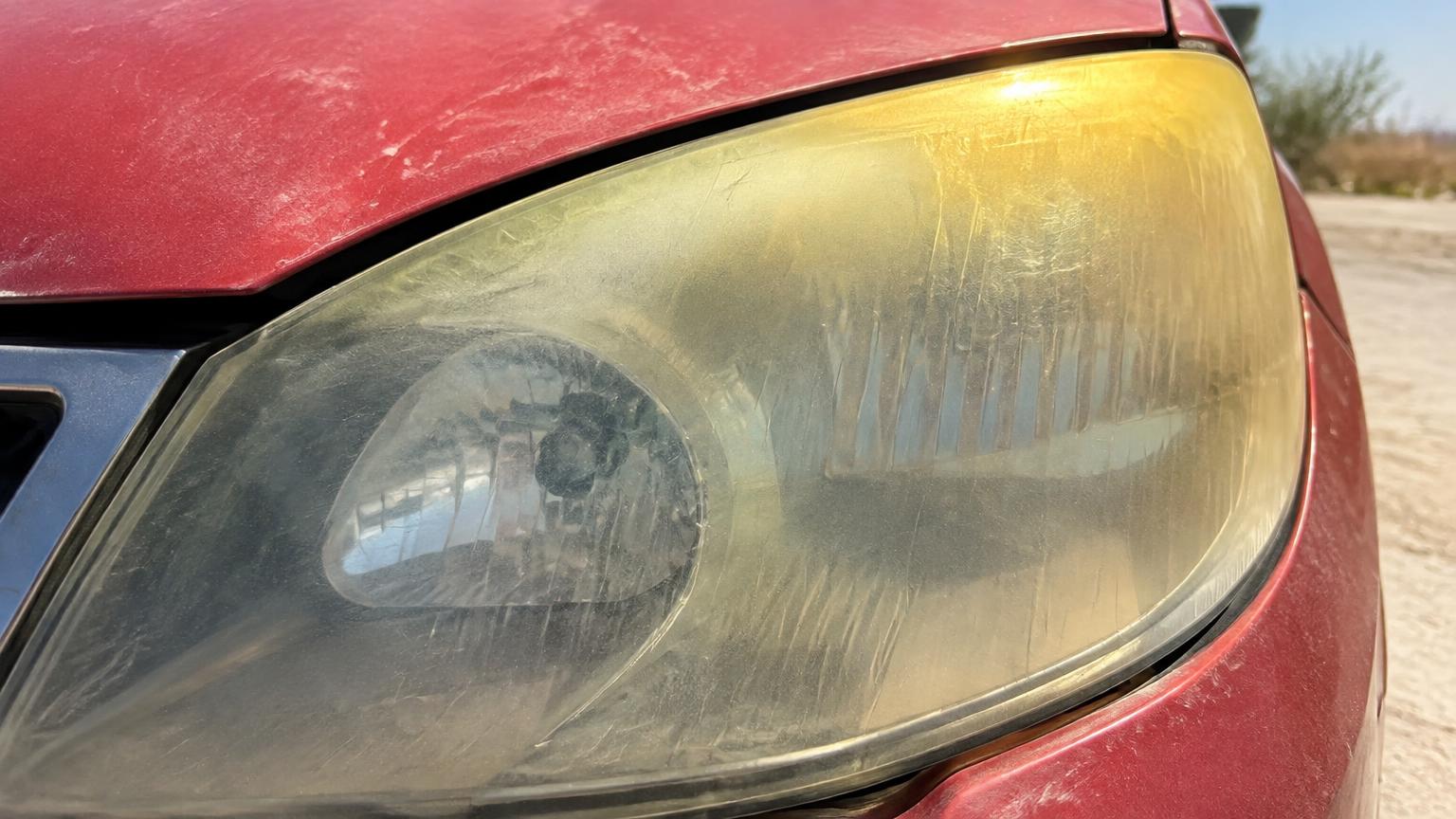
What are headlight lenses made of?
Older cars had glass headlights. Glass doesn't yellow, but it's heavy and it shatters. Today almost every lens is polycarbonate: a clear, light plastic that's very hard to break and easy to mould into the shapes modern headlights need.
The trade-off is UV. Polycarbonate on its own breaks down in sunlight. So manufacturers coat the outside of the lens with a thin, clear UV hard coat. It's a sacrificial layer: it takes the sun so the plastic doesn't.
What causes headlights to turn yellow?
The hard coat wears out. Years of UV exposure break it down until it starts to crack, go chalky and lose its grip on the lens. You'll often see it as a fine crazed or peeling pattern up close.
Once it's failed, the polycarbonate underneath is exposed directly to the sun. That plastic oxidizes and yellows. The result is the familiar foggy, amber, slightly rough lens. In short: yellow headlights are sun damage.
Why does the top of the headlight go yellow first?
Because it gets the most sun. The top and the side of the lens that faces upward catch direct sunlight for hours a day. The lower edge is shaded by the bumper and gets much less.
That's why so many headlights have a yellow band or patch across the top while the bottom still looks fairly clear. If your car is parked facing the same way every day, one headlight can also age faster than the other.
Why does Arizona make headlight yellowing worse?
- Extreme UV. Strong sun, most of the year, with few cloudy days. The hard coat is under attack almost constantly.
- Heat. Lenses sitting in summer sun get very hot. Heat speeds up the breakdown of coatings and plastics.
- Dust. Blowing desert dust and monsoon storms sand-blast the lens a little at a time and wear the coating.
- Automatic car washes. Brushes scuff the coating, and harsh chemicals strip what protection is left.
- Outdoor parking. Street, driveway and open-lot parking means hours of direct exposure every day.
Is it oxidation or something inside the headlight?
It matters, because only one of them can be fixed by restoration. Outside damage — yellowing, roughness, haze on the surface — is what restoration removes. Inside damage — fog, droplets, haze on the inner wall — means the housing seal has failed. That needs repair or replacement.
Headlight self-check: can my headlights be restored?
- Clean the lens first. Wash it and dry it. Dust and road film make a lens look worse than it is.
- Find where the haze is. Look at the lens at an angle in daylight. If the haze looks like it's on the surface, it's usually the outside. If you can see fog, droplets or a film on the inside wall, it's inside the housing.
- Feel it. Run a clean fingertip across the lens. A rough, chalky or sandpaper feel means the outer hard coat has failed. That's what restoration fixes.
- Check the top. Yellow patches heaviest on the top or sun-facing side point to UV damage on the outside of the lens.
- Look for moisture. Water droplets or condensation inside the lens, especially after a wash or a cool morning, mean a seal has failed. Polishing the outside won't fix that.
- Look for cracks and chips. Cracks through the lens or broken mounting tabs need repair or replacement, not restoration.
Do yellow headlights affect night driving?
Yes. A hazy lens blocks and scatters light, so less of it reaches the road ahead. It can also throw light in directions it shouldn't, adding glare for oncoming drivers. Many owners only notice how dim their lights had become after the lenses are restored.
Upgrading to brighter bulbs doesn't solve it. The light still has to pass through the same cloudy lens, and some brighter bulbs run hotter, which doesn't help an already damaged lens.
Can I fix foggy headlights myself?
Sometimes, for light haze. But household hacks like toothpaste, bug spray or baking soda only clear the surface briefly and leave no UV protection, so the haze returns. A proper fix means removing the failed coating completely, polishing, and adding new UV protection. We cover the honest pros and cons in DIY headlight kits vs. professional restoration, and the full process in headlight restoration in Phoenix and Scottsdale.
To be straight about limits: restoration only fixes the outside of the lens. Haze or moisture inside the housing, cracks, and failed seals mean the housing needs repair or replacement. A good detailer will tell you that before starting, not after.
What are my options for yellow headlights?
| Option | Cost tier | What it fixes | Clarity | Holds up | Best for |
|---|---|---|---|---|---|
| Do nothing | Low | Nothing; haze keeps building | Keeps getting worse | Damage continues in the sun | Nobody, if you drive at night |
| DIY kit / household hacks | Low | Light outer haze, if done carefully; hacks only clear it briefly | Varies with skill | Often hazes again quickly without real UV protection | Light haze on an older daily car |
| Professional restoration | Medium | Removes failed coating and outer oxidation, then adds new UV protection | Strong, even clarity | Depends on the protection step, parking and washing | Most yellowed or cloudy lenses |
| Restoration + PPF or coating | Medium | Same as restoration, plus a protective layer over the lens | Strong, even clarity | Best chance of a lasting result | Cars you plan to keep; sun-parked cars |
| Replacement headlight assembly | High | Everything, including inside-the-lens haze, cracks and failed seals | As new | New lens still needs protecting in Arizona | Internal moisture, cracks, broken housings |
If my headlights are yellow, is my paint damaged too?
Often, yes. The same sun that broke down the headlight's hard coat has been working on the clear coat, the black trim and the dashboard for just as long. Headlights simply show it first, because polycarbonate yellows where paint tends to fade, dull and haze more quietly.
So while the lenses are being done, it's worth looking at the hood and roof in direct sun. Dull patches, light swirls and faded trim are common on cars that have yellow headlights. That's where paint correction and ceramic coating come in. More detail in how the Phoenix sun damages car paint.
Just bought a pre-owned car with tired headlights? That's usually a sign the whole car needs a reset. See how to make a used car feel new in Arizona. And if there are light marks around the lenses from a previous DIY attempt, see scratch removal.
How do I stop it from happening again?
Park in shade or a garage where you can. Hand wash instead of using brushed automatic washes. And after restoration, protect the lens with UV coating, ceramic coating or PPF. We work in your driveway or at your office in Scottsdale, Paradise Valley, North Phoenix and Cave Creek. No drop-off, no ride to arrange.
Frequently asked questions
Why are my headlights yellow?
The factory UV hard coat on the polycarbonate lens has broken down from sun exposure, and the exposed plastic has oxidized and yellowed.
Why is only the top of my headlight yellow?
The top of the lens faces the sun and gets the most UV exposure, so its coating fails first. The lower edge is more shaded.
Do cloudy headlights reduce visibility?
Yes. A hazy lens blocks and scatters light, reducing how much reaches the road and potentially adding glare for other drivers.
Can yellow headlights be fixed?
If the damage is on the outside of the lens, yes. Restoration removes the failed coating, polishes the lens clear and adds new UV protection.
What if the fog is inside my headlight?
Fog or moisture inside means a seal has failed. Restoration can't reach it; the housing needs repair or replacement.
Will brighter bulbs fix dim yellow headlights?
No. The light still passes through the same cloudy lens. The lens itself needs restoring.