How to Protect Your Mountain Bike in Arizona: Frame Film, Ceramic Coating & Easy Mud Cleanup
By Anthony Verrelli, 18+ years in detailing and paint protection
Quick answer
Use clear frame protection film on the impact and rub zones, such as the down tube, chainstay and cable-rub points, then apply a ceramic coating over the rest of the painted frame. Film absorbs rock strikes and abrasion. Coating makes dust and mud release faster and adds UV protection. Neither goes on brakes, stanchions or the drivetrain.
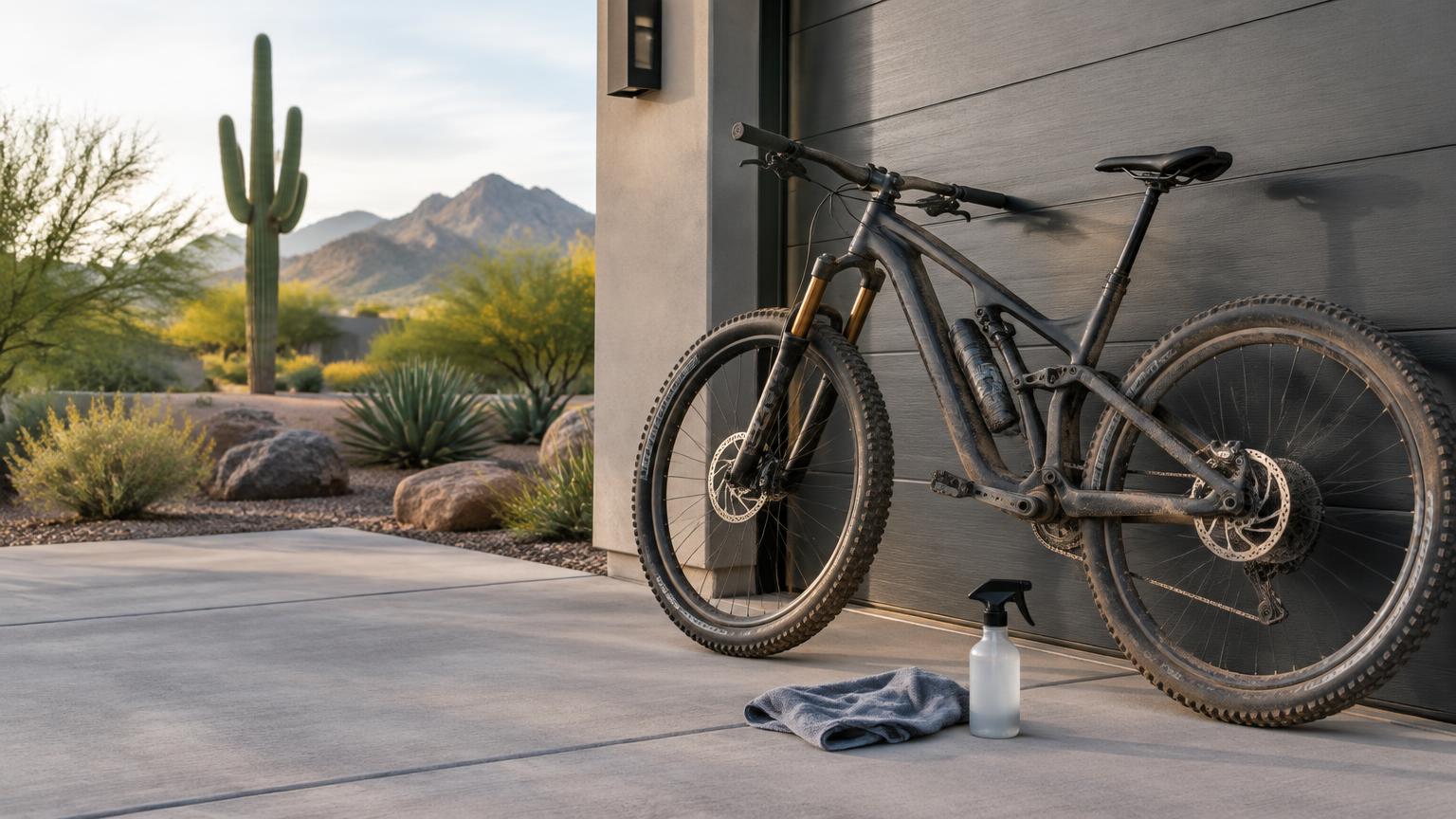
What's the best way to protect a mountain bike frame?
Short answer: combine two layers that do different jobs. Frame protection film goes where the bike takes physical hits and rubbing. A ceramic coating goes over the painted surfaces to make them slick, easier to clean and more resistant to sun. Film handles impact. Coating handles grime and UV. Most riders who use the bike hard benefit from both.
Think of it the way you'd protect a car that sees dirt roads. Film is the armour, coating is the easy-clean finish. Using only one leaves a gap. A coated down tube still chips when a rock hits it, and a filmed frame with no coating still holds onto dust and mud. If you want the background on what a coating actually is, start with what is ceramic coating.
The order matters too. Clean and decontaminate the frame first, apply film to the hit zones, then coat the painted areas and the film itself, if the film maker allows coating over it. That keeps edges sealed and the whole bike uniform to clean.
Why are Arizona trails so hard on bike paint?
Short answer: Arizona combines sharp rock, abrasive decomposed granite, strong year-round UV, monsoon mud and hard tap water. Each one wears paint in a different way, and they stack. A bike ridden often here sees more grit, more sun and more wash cycles than one ridden in a milder, wetter climate.
- Rock strikes. Popular riding areas like McDowell Sonoran Preserve, South Mountain and Hawes are rocky. Front tyres flick stones straight at the down tube.
- Sand and grit. Fine decomposed granite works into every gap. Wiping it off dry drags it across the paint like sandpaper.
- UV fading. Strong sun dulls clear coat and fades bright colours and decals over time. The same process ages car paint; see how Phoenix sun damages paint.
- Monsoon mud. Summer storms turn trails into sticky clay that dries hard and clings to the frame.
- Hard-water spots. Rinsing with Phoenix tap water and letting it air-dry leaves mineral spots that can etch clear coat. The fix is the same as on a car; see hard water spots.
- Road grit on the drive. A bike on a hitch rack rides behind the car's tyres all the way to the trailhead, collecting road grime and small stones.
Where does a mountain bike get damaged most?
Short answer: the down tube from rock strikes, the chainstay from chain slap, the head tube and top tube from cable rub, the seatstays and crank arms from shoe rub, and any spot where a rack clamps or touches the frame. These are the places to film first, because coating alone can't stop that kind of wear.
- Down tube: takes direct hits from rocks thrown up by the front wheel. The most common chip zone.
- Chainstay: the chain slaps it on rough descents and wears through paint quickly.
- Head tube and top tube: cables and housing rub here with every turn of the bars.
- Seatstays and crank arms: heels and shoes brush them on every pedal stroke.
- Rack contact points: clamps, trays and straps rub the frame and fork, especially on long highway drives.
Before protecting anything, look at your own bike in good light. Existing rub marks show you exactly where your riding style and setup cause wear.
Does ceramic coating actually work on a bike?
Short answer: yes, for what it is designed to do. A ceramic coating leaves a hard, slick, hydrophobic layer on paint and film. Dust and mud release faster, washes are quicker and gentler, and the finish gets added UV protection. It does not stop rock strikes or chips. That is the job of frame protection film.
The practical benefit is less scrubbing. On an uncoated frame, dried mud grips the paint and needs agitation to remove. On a coated frame, a low-pressure rinse and a soft wash mitt usually lift it, which means less abrasion over the life of the bike. Less scrubbing is what keeps the finish looking new.
Be realistic about the limits. A coating is microns thin. It resists light marring and chemical staining, but a sharp stone at speed goes straight through it. Anyone who tells you a coating makes a frame chip-proof is overselling it. Coating also needs basic care to keep working; the same principles apply as on a car, covered in how to maintain ceramic coating.
Frame protection film vs ceramic coating: which does your bike need?
Short answer: film if your concern is chips and rub marks, coating if your concern is cleaning and sun, both if you ride hard and want the bike to stay sharp. Film is physical protection. Coating is surface protection. They complement each other rather than compete, which is also how we think about PPF vs ceramic on off-road vehicles.
| Option | Protection type | What it stops | What it doesn't | Maintenance | Best for |
|---|---|---|---|---|---|
| Frame protection film | Physical barrier | Rock chips, cable rub, shoe rub, rack scuffs | Grime build-up, UV on uncovered areas | Gentle washing; watch edges for lift | Down tube, chainstay, rub zones |
| Ceramic coating | Hard hydrophobic layer | Mud and dust sticking, light marring, UV, staining | Rock strikes and chips | pH-neutral washes, occasional top-up | Whole painted frame and fork crown |
| Film + coating | Both layers | Impact in hit zones, grime and UV everywhere else | Damage to uncoated parts like stanchions | Same as coating | Riders who use the bike hard and want it to last |
Is it safe for carbon frames, matte finishes, and e-bikes?
Short answer: generally yes, with the right products and precautions. Carbon frames with a clear coat can be filmed and coated like painted frames. Matte finishes need matte-specific products and must never be polished. E-bikes need the battery removed and products kept away from electrical parts. Always check your frame manufacturer's guidance first.
- Carbon frames. The coating bonds to the clear coat, not the carbon itself. Carbon frame protection with film is common, but use a film and adhesive the frame maker approves, and never use solvents the manufacturer warns against.
- Matte finishes. Matte bike frame care is different. Polishing or gloss products create shiny patches that can't be undone. Use matte-specific coatings and soaps only.
- E-bikes. For e-bike ceramic coating, remove the battery first. Keep products away from charge ports, connectors, the display and motor seals. Cover them before washing.
- Warranty. Some manufacturers specify what can be applied to their frames. Check before any product goes on.
How do you wash a muddy mountain bike without damaging it?
Short answer: rinse with low pressure, wash with a pH-neutral soap and a soft mitt, rinse again, dry fully, then re-lube the chain. Never aim a pressure washer at bearings, pivots, the headset, the bottom bracket or hubs, because it forces water and grit past the seals. Drying matters in Phoenix, where tap water leaves mineral spots.
- Let heavy mud soften. A gentle pre-rinse and a few minutes of soaking beats scrubbing dried clay.
- Low-pressure rinse. A garden hose on a soft setting, working top to bottom.
- pH-neutral soap. Strong degreasers and harsh cleaners can strip coatings and dry out seals. Keep degreaser for the drivetrain only.
- Soft tools. Microfiber mitt for the frame, separate brushes for tyres and the drivetrain so grit never touches the paint.
- Dry fully. Use a clean microfiber towel or a blower. Air-drying in the sun leaves hard-water spots.
- Re-lube the chain after every wash, then wipe off the excess.
This is also the answer to how to keep mud off a mountain bike in practice: you can't stop it landing, but a coated frame and the right wash routine stop it staying.
What parts of a bike should never be coated?
Short answer: brake rotors, brake pads, rim braking surfaces, fork stanchions and seals, the dropper post and the drivetrain. Coating contamination on rotors or pads can compromise braking. On stanchions and dropper posts it can affect seals and smooth movement. Only painted and filmed surfaces should be coated.
- Brake rotors and pads: any coating or overspray here can reduce braking. Cover them during application and never wipe a coated towel near them.
- Rim braking surfaces: same reason, on bikes with rim brakes.
- Fork stanchions and seals: they rely on specific lubrication and smooth travel.
- Dropper post: same as stanchions.
- Drivetrain: chain, cassette, chainrings and derailleurs need lubricant, not a coating.
If a rotor or pad does get contaminated, stop riding the bike and have the brakes checked by a bike shop before the next ride.
DIY vs professional: what are your options?
Short answer: DIY spray sealants and precut frame kits are a reasonable choice for many riders and cost the least. Professional ceramic coating adds better preparation and durability. Professional film plus coating gives the most complete protection. The right option depends on the bike, how hard you ride it and how much time you want to spend.
| Option | Cost tier | Pros | Cons | Best for |
|---|---|---|---|---|
| DIY spray sealant | Low | Quick, easy, makes washing easier | Short-lived; no impact protection | Casual riders, budget-conscious |
| DIY precut frame kit | Low to medium | Targets your bike's hit zones; good impact protection | Fiddly to fit; bubbles and lifted edges if rushed | Handy riders with a common frame model |
| Professional ceramic coating | Medium | Proper decontamination and prep; longer-lasting slick finish | No chip protection on its own | Riders who want easy cleaning and UV protection |
| Professional frame film + ceramic coating | High | Impact protection plus easy cleaning in one job | Highest cost tier; takes the most time | New or high-value bikes ridden hard |
Doing it yourself is genuinely fine for a lot of riders. Where professional work earns its keep is preparation: decontaminating the frame properly, masking brakes and suspension, laying film without bubbles, and applying coating evenly. Paint that already has light marks may also benefit from a one-step paint correction before anything is sealed in.
Can AVOTTO protect my bike at the same visit as my car?
Short answer: that is how we plan to offer it. AVOTTO is a mobile service that comes to your home, so a bike can be added to a vehicle detail at the same visit. No trip to a shop, no separate appointment. We open in Scottsdale and North Phoenix in February 2027, and founding members get first access to scheduling.
If you're also protecting a side-by-side or trail rig, the thinking is the same; see protecting a new side-by-side. For your car, start with mobile detailing or our ceramic coating options.
Frequently asked questions
How long does ceramic coating last on a bike?
It depends on the product, how often the bike is ridden and washed, and how much sun it sees. Riding conditions in Arizona are demanding, so expect it to need occasional top-ups. Gentle, pH-neutral washing helps it last longer.
Can you put ceramic coating on a carbon mountain bike?
Yes, on carbon frames that have a clear coat or paint. The coating bonds to the finish, not the raw carbon. Check your frame manufacturer's guidance before applying any product.
Does frame protection film yellow in the Arizona sun?
Lower-quality films can discolour with long UV exposure. Better films are made to resist yellowing, and storing the bike out of direct sun helps. Ask what film is being used before it goes on.
Will ceramic coating make my bike easier to clean after muddy rides?
Yes. Mud and dust release faster from a coated surface, so a low-pressure rinse and a soft wash usually lift it with less scrubbing.
Can you ceramic coat an e-bike?
Yes. Remove the battery first, cover the charge port, connectors and display, and keep products away from electrical parts. Coat only the painted frame and filmed areas.
Should I protect a brand-new bike before the first ride?
That is the best time. The paint is clean and undamaged, so film and coating seal in a perfect finish instead of locking in existing marks.