Lease Return Detailing: How to Avoid Excess Wear-and-Tear Charges
By Anthony Verrelli, 18+ years in detailing and paint protection
Quick answer
It can reduce them. Wear-and-tear charges are often based on what the inspector can see and measure. A bumper-to-bumper detail removes correctable scratches, swirls, scuffs, stains and odours before turn-in. Book your lessor's pre-inspection first, use the report as a punch list, then detail. Dents, wheels and glass need specialists.
How are lease wear-and-tear charges decided?
At the end of a lease, an inspector walks around the car and records damage beyond what the lessor counts as normal wear. That list becomes your bill.
The key point: charges are often based on what the inspector can see and measure. A scratch they can see gets recorded. A swirl-covered, dusty car with a stained seat looks more worn than it is. A clean, corrected car shows its real condition.
Many lessors use a 'credit card' style rule for scratches and dents — roughly, if a credit card covers it, it may count as normal wear. But rules vary by lessor. Read your own lease agreement and wear-and-tear guide before you do anything.
What's the best timeline before a lease return?
1. Book the pre-inspection
Most lessors offer a pre-inspection before turn-in, often free and scheduled weeks ahead. Book it early. It's the most useful document you'll get, because it tells you what the inspector is likely to flag.
2. Use the report as a punch list
Go through it line by line. Sort each item into three groups: things a detail can fix, things a specialist can fix, and things you'll accept.
3. Detail, then specialist repairs
Book the detail with enough time before turn-in for any specialist work too. Specialist repairs like PDR or wheel refinishing often come first, then the detail finishes the car.
4. Turn in
Keep the car clean and parked carefully in the final days. Gather both keys, manuals and mats. The full checklist is in what lease inspectors actually look for.
What does a bumper-to-bumper lease return detail include?
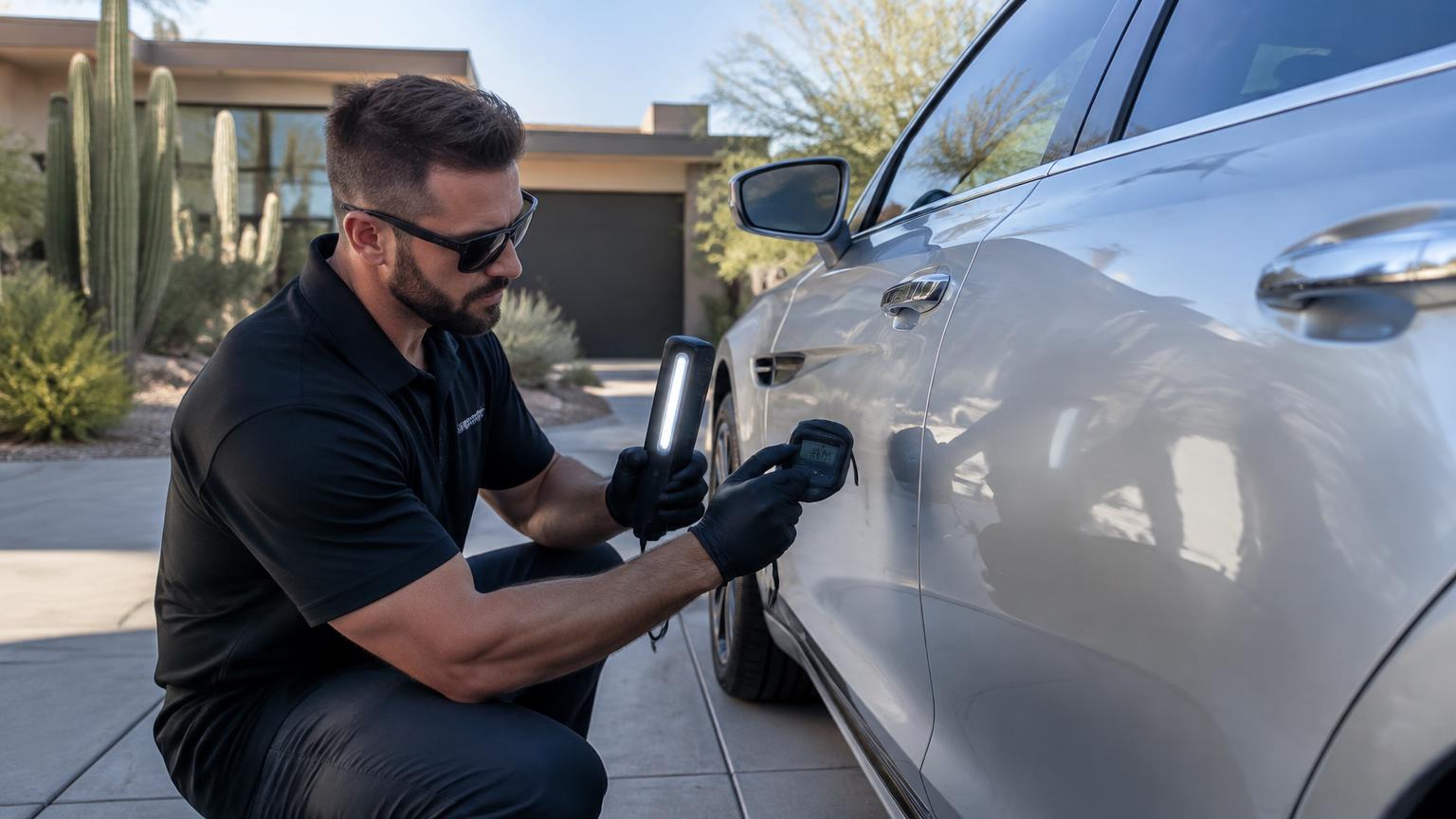
- Inspect every panel under proper lighting, with a paint depth gauge so we know how much clear coat there is to work with.
- Map every defect. Scratches, swirls, scuffs, water spots and stains, panel by panel.
- Correct everything correctable. Polishing and scratch removal on the paint, within safe paint depth.
- Restore the headlights. Arizona sun yellows them. See headlight restoration.
- Deep clean the interior and remove odours. Steam, hot-water extraction and ozone where needed.
- Hand over a clear list of anything we can't fix, so you can decide what to do before the inspection.
Every step is about what the inspector will see. A corrected panel looks different under inspection lighting: light scratches are gone, not just hidden, and the paint reads as cared-for.
Lease return self-check: what should I look at before turn-in?
- Wash and dry the car first. Dust hides some marks and fakes others.
- Use good light. Low-angle sunlight or a bright flashlight moved across each panel. Look from several angles.
- Paint: scratches, swirls, scuffs, water spots, bird-dropping etching. Try the fingernail test on scratches.
- Bumpers: corner scuffs and paint transfer from parking.
- Dents: sight down each panel's reflection. Dings show as a wobble in the line.
- Wheels: curb rash on the rim edges.
- Tyres: tread depth and matching brands, against your lease terms.
- Glass: chips and cracks in the windshield.
- Lights: cloudy or yellow headlights, cracked lenses.
- Interior: stains, tears, burns, headliner marks, pet hair, faded or cracked trim.
- Odour: close the car up in the sun for an hour, then open it. Smoke, pet and food smells show up in the heat.
- Items: both keys, manuals, floor mats, parcel shelf or cargo cover, charging cables.
What can detailing fix before a lease return?
- Light scratches and swirls in the clear coat, through paint correction.
- Bumper scuffs and paint transfer. More in can scratches be fixed before returning a lease.
- Water spots and light etching.
- Cloudy headlights.
- Stains, pet hair and odours through a full interior detail. See lease return interior cleaning.
- Faded trim, cleaned and protected.
What needs a specialist instead?
What we don't do: dent repair or PDR, wheel curb-rash repair, windshield replacement, tyres, and bodywork or repaint. For those, we'll point you to a specialist and tell you what we saw, so you can get quotes and compare them with the likely charge.
Deep scratches that go through the clear coat also fall outside polishing. Sometimes a touch-up or body shop is the honest answer, and sometimes accepting the charge is cheaper. You'll get the information to decide.
Is it worth paying for a detail before a lease return?
Often, because fixing what's fixable usually costs less than being charged for it. But it depends on the car. If the pre-inspection comes back nearly clean, a careful wash may be enough. If it lists scratches, scuffs, stains and odours, a detail is where those get handled.
| Option | Cost tier | What it handles | Inspection result | Best for |
|---|---|---|---|---|
| Do nothing and pay charges | Varies; can be high | Nothing; every mark is assessed as-is | Inspector sees all wear, plus dirt that hides or exaggerates it | Cars in genuinely excellent condition |
| DIY wash & vacuum | Low | Surface dirt, loose debris | Cleaner, but scratches, stains and odours remain | Light wear, short on time |
| Professional lease-return detail | Medium | Correctable scratches and swirls, scuffs, water spots, headlights, stains, odours | Correctable wear removed; clear list of what's left | Most lease returns |
| Specialist repairs (PDR, wheels, glass) | Medium to high | Dents, curb rash, windshield chips and cracks, tyres | Fixes what detailing can't | Specific damage on the pre-inspection report |
One honest note: AVOTTO isn't affiliated with any leasing company or inspection service, and nobody can promise a charge will be avoided or waived. Rules vary by lessor. Always check your own lease agreement and wear-and-tear guide. What a proper detail does is remove the wear that can be removed, so the inspector is looking at a car in its best possible condition.
Arizona adds its own wear: sun-faded black trim, hard-water spots from sprinklers and washes (see hard water spots on car paint), monsoon dust packed into vents, interior smells baked in by summer heat, and cloudy headlights.
Why use a mobile detailer at the end of a lease?
The final weeks of a lease are busy: a new car to choose, paperwork, the turn-in appointment. A mobile detail means the work happens in your driveway or office lot while you get on with your day. We come to your home or office in Scottsdale, Paradise Valley, North Phoenix and Deer Valley. In the last weeks of a lease, that's one less trip to arrange.
Just leased or bought the next car? Starting it right is easier than fixing it later: see one-step paint correction for used cars.
Frequently asked questions
Does detailing help avoid lease return charges?
It can reduce them by removing correctable wear like scratches, swirls, scuffs, stains and odours before the inspector sees the car. Nobody can promise charges will be avoided.
When should I detail my car before a lease return?
After the lessor's pre-inspection, using the report as a punch list, and with enough time before turn-in for any specialist repairs.
What is the credit card rule for lease scratches?
Many lessors treat scratches or dents smaller than a credit card as normal wear. Rules vary, so check your own lease agreement and wear-and-tear guide.
Can a detailer fix dents before a lease return?
No. Dents need paintless dent repair or bodywork from a specialist. A detailer handles paint, headlights and interior.
Is a pre-inspection worth booking?
Yes. It's often free and shows what the inspector is likely to flag, so you can fix only what matters.
Do you come to my home for a lease return detail?
Yes. We work at your home or office in Scottsdale, Paradise Valley, North Phoenix and Deer Valley.