How to Remove Smoke, Pet & Previous-Owner Smells: Ozone Treatment Explained
By Anthony Verrelli, 18+ years in detailing and paint protection
Quick answer
Clean the source first: deep-clean carpets, seats and hard surfaces, clean the headliner film and vents, and replace the cabin air filter. Then use ozone treatment to neutralize what's left, with the car unoccupied and aired out afterwards. Heavy smoke may need repeat sessions.
Why don't air fresheners get rid of car smells?
Because they don't remove anything. They add a stronger smell on top of the one you're trying to hide. When the freshener fades, the original odour is still there.
Smoke, pet and lived-in smells come from residue: tar film on every surface, pet dander and oils in the carpet, spills soaked into foam, bacteria in damp spots. Until that residue is gone, the smell comes back.
Why do car smells get worse in Arizona heat?
Heat makes odour compounds evaporate faster. A car sitting in the sun gets hot enough inside that whatever is in the seats, carpet and headliner releases more strongly. That's why a used car can smell fine on a cool morning and terrible after an afternoon in a parking lot.
Why do you have to clean the source first?
Ozone neutralizes odour. It does not remove the source — residue, spills, or the smoke film on the headliner. If the source stays, the smell returns.
So the order is: clean everything, then treat what's left.
- Remove everything — mats, items, debris from under and between seats.
- Vacuum thoroughly, including seat rails and the trunk.
- Hot-water extraction of carpets, mats and cloth seats.
- Steam and wipe hard surfaces — dash, console, door panels, glass. Smoke film coats everything.
- Clean the headliner carefully — smoke collects there.
- Clean leather — it holds odours too.
- Clean the vents.
- Replace the cabin air filter.
Those cleaning steps are covered in used car interior detailing.
How does ozone treatment work?
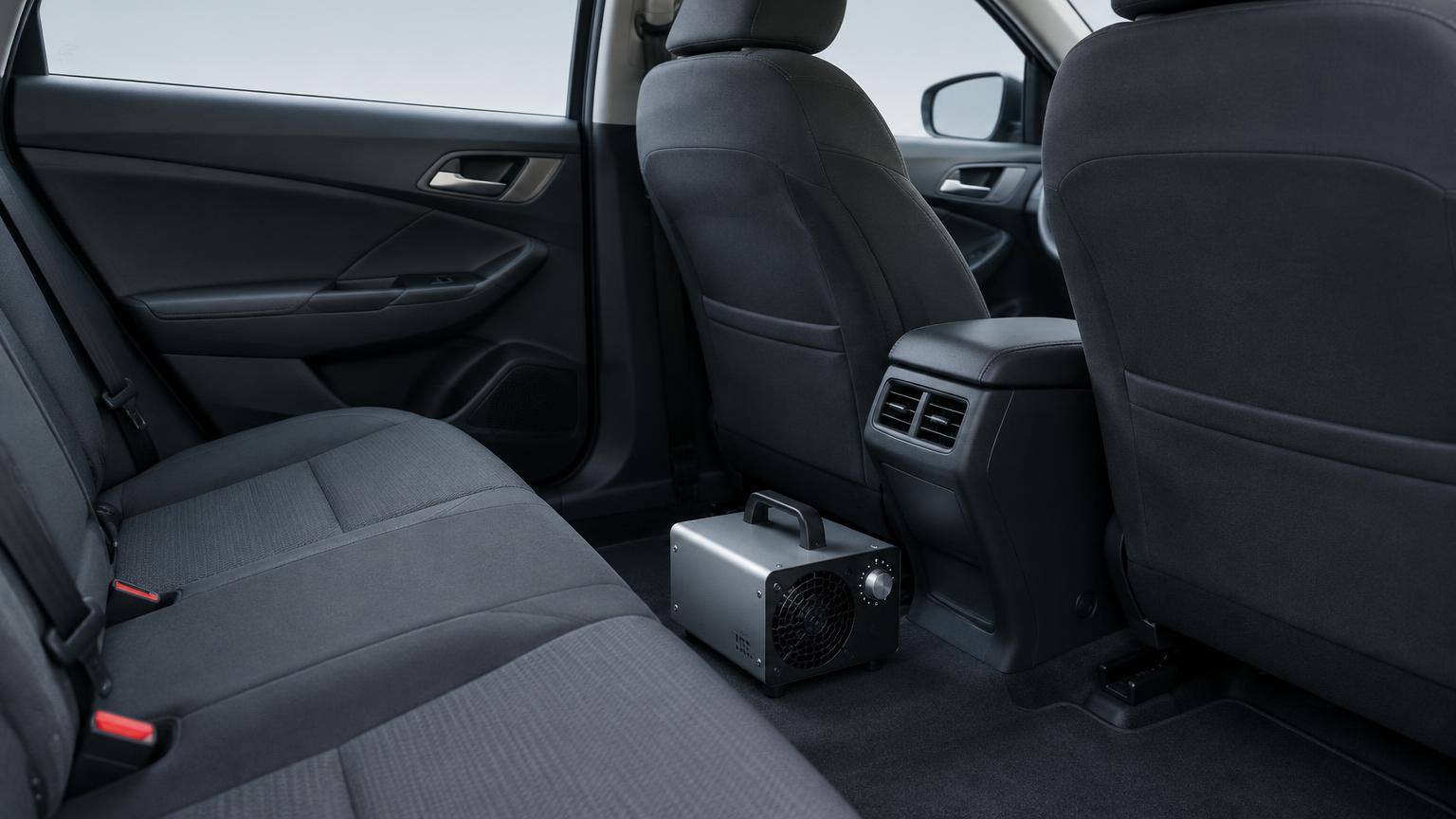
An ozone generator converts oxygen into ozone, a reactive form of oxygen. Inside a closed cabin, ozone reacts with odour-causing molecules and breaks them down. It reaches places cleaning can't — inside foam, deep in fabric, into the ventilation system when the air is set to recirculate.
Is ozone treatment safe?
It's safe when done properly, and the safety steps aren't optional:
- The vehicle must be unoccupied — no people, no pets — during treatment. Ozone is harmful to breathe at treatment levels.
- Doors and windows are closed during treatment so the ozone stays in the cabin.
- The car is aired out afterwards with doors open before anyone gets in.
- Treatment is timed to the size of the cabin and the strength of the odour.
Does ozone remove smoke smell completely?
Realistic expectations matter here. Light odours often respond well to a deep clean plus one ozone session. Heavy, long-term smoking is harder. Smoke residue gets into the headliner, foam and ventilation, and repeat sessions may be needed. In the most severe cases, some odour may linger in hot weather.
Anyone who promises a guaranteed result on a heavy smoker's car without seeing it isn't being straight with you.
What about pet smells?
Pet odours come from hair, dander, oils and accidents. Hair weaves into carpet and needs thorough removal. Accidents soak deep, so extraction is critical. Ozone helps with what's left after cleaning.
Why replace the cabin air filter?
The cabin filter traps dust, pollen and odour particles from every breath the HVAC system has taken. On a used car it may be full of the previous owner's smoke, pet dander and monsoon dust. Replace it, or the smell blows back in every time you turn on the AC.
Is ozone part of the New-to-You Reset?
It's the optional fifth step, for cabins that hold odours after cleaning:
- Full exterior decontamination — iron fallout remover, tar removal and clay treatment.
- One-step paint correction — a single machine-polishing stage to remove most light swirls, haze and water-spot marks and restore gloss.
- Ceramic coating to lock in the result.
- Full interior detail.
- Optional ozone treatment if the cabin holds odours from the previous owner.
To be straight about limits: a one-step paint correction improves gloss and removes many light defects. It does not remove deep scratches, clear-coat failure or rock chips. Those need multi-step correction or paint work. And ceramic coating doesn't stop chips or scratches — it adds gloss, UV and chemical resistance, and makes washing easier.
| Option | Cost tier | What it fixes | Gloss | How long it holds up | Best for |
|---|---|---|---|---|---|
| Do nothing | Low | Nothing; contamination and swirls stay | As bought | Paint keeps ageing in the sun | Cars you plan to sell on quickly |
| Wash & wax | Low | Surface dirt only; fills some swirls briefly | Short-term shine | Washes away quickly in Arizona heat | A quick tidy-up |
| One-step correction + ceramic | Medium | Removes many light swirls, haze and water-spot marks, then protects | Strong, clear gloss | Coating keeps the corrected finish easier to maintain | Most used cars in average condition |
| Multi-step correction + ceramic | High | Removes more and deeper defects, then protects | Highest clarity | Same coating benefits on a more refined finish | Dark, neglected or high-value cars |
What's on the first-week-of-ownership checklist?
- Book the reset before you settle in. Doing it in the first week means you only pay to fix the previous owner's wear once.
- Don't take it through an automatic wash. Brushes add the swirls you're about to pay to remove.
- Look closely at the paint in direct sun: swirls, haze, water spots, orange specks on light colours.
- Check the cabin: under the seats, seat rails, vents, headliner, and how it smells after sitting in the heat.
- Replace the cabin air filter if there's no record of when it was last done.
- Note anything the reset can't fix — rock chips, deep scratches, failing clear coat — so you can plan for them.
- Park in shade or a garage while you wait, to slow further sun damage.
For the paint, see ceramic coating in Phoenix and paint correction in Phoenix, or the full guide to making a used car feel new. We come to your home or office in Scottsdale, Paradise Valley, North Phoenix, Deer Valley and Cave Creek.
Frequently asked questions
How do you remove smoke smell from a car?
Deep-clean the source first — carpets, seats, hard surfaces, headliner and vents — replace the cabin air filter, then use ozone treatment to neutralize what's left.
Does ozone remove smoke smell?
It neutralizes odour well after a deep clean. Heavy smoke may need repeat sessions, and ozone doesn't remove residue on its own.
Is ozone treatment safe for my car?
When done properly, yes. The vehicle must be unoccupied during treatment and aired out afterwards.
Why do air fresheners not work?
They cover the smell instead of removing the residue causing it, so the odour returns when they fade.
How do I get pet smell out of a car?
Remove hair thoroughly, extract carpets and seats to pull out accidents and oils, then use ozone for anything left.
Should I replace the cabin air filter in a used car?
Yes. It can hold the previous owner's smoke, dander and dust and blow odours back into the cabin.
Why does my car smell worse in the heat?
Heat makes odour compounds in the seats, carpet and headliner release more strongly.