Heavy Equipment Ceramic Coating: Why New Machines Should Be Coated Before the First Job
By Anthony Verrelli, 18+ years in detailing and paint protection
Quick answer
On new machines in Arizona, usually yes. Ceramic coating resists UV fading and chalking, makes caliche, mud and fresh concrete easier to wash off, and keeps decals and paint looking newer. It doesn't stop gouges or chips. Delivery day is the cheapest time to coat, because no correction is needed.
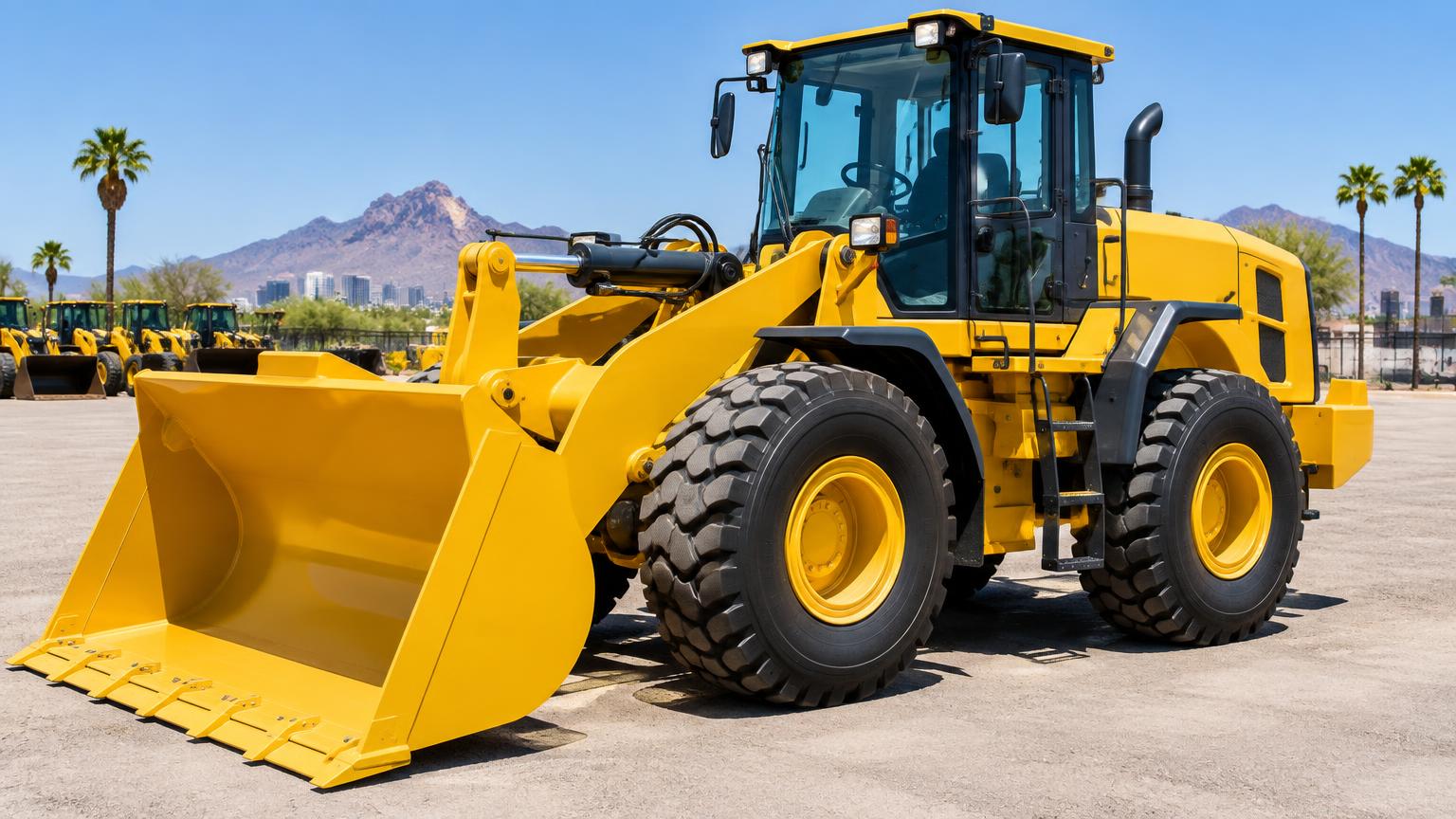
How does the Arizona sun damage equipment paint?
Equipment lives outside. In Arizona that means intense UV most of the year. Yellow and orange equipment paint is especially quick to show it: the colour fades, then the surface chalks. Rub a finger on an older machine and it comes away coloured.
Decals fade and crack. Black plastics turn grey. Cab glass collects hard-water spots from washdowns that dry in the sun. Add caliche dust, haboobs, monsoon mud, and concrete and asphalt splatter, and paint takes a beating from every direction.
Why is delivery day the cheapest time to coat?
A new machine arrives with perfect paint. No oxidation to remove, no chalking to polish off, no stains to cut. The coating goes straight on.
Wait a season or two and the paint has to be corrected first. That's more time, more labour and more cost — and some damage, like deep fade on decals, can't be reversed. Coating on day one also means it's protecting the paint for its whole working life, not part of it.
What's the business case for coating new equipment?
- Faster, easier washdowns. Less labour, and gentler chemicals on the paint.
- Paint and decals hold up longer against UV fading.
- Better resale, auction and trade-in appearance. A machine that looks cared for is easier to sell.
- A professional fleet image. Clean machines on a job site say something to GCs and homeowners.
- No transport, no downtime. We coat at your yard.
Concrete and mud release more easily from a coated surface when cleaned promptly. That doesn't mean nothing sticks — leave concrete to cure on any surface and it will take work to remove.
| Option | Cost tier | Protection | Washdowns | Effort to keep up | Best for |
|---|---|---|---|---|---|
| Ceramic coating | Medium | UV and chemical resistance; keeps gloss. No protection from gouges or impact | Mud, dust and fresh splatter release more easily | Low; gentle wash, periodic top-up | New machines on day one |
| Wax / sealant | Low | Short-term gloss and some UV help | Slightly easier at first | High; reapply often in Arizona heat | Short-term or occasional use |
| Do nothing | Low up front | None; paint and decals chalk and fade | Harder over time as paint oxidises | None until it needs fixing | Machines near end of service life |
| Repaint later | High | Resets appearance, then starts fading again | Back to bare paint | Downtime and transport for paint work | Old machines worth refreshing |
Be clear on what coating does. Ceramic coating does not stop rock chips, dents, gouges or deep scratches — a bucket against rock will still mark the paint. It resists UV and chemicals, makes washdowns easier and keeps the gloss. For high-impact areas, paint protection film is the physical layer.
What parts of a machine get coated?
- Paint — the main body, cab, counterweights and booms where suitable.
- Cab glass — helps water and dust shed for better visibility.
- Plastics and trim — slows fading and chalking.
- Wheels — easier to clean mud and brake dust.
Working surfaces like bucket interiors, cutting edges and tracks don't get coated. They're wear parts.
What won't a ceramic coating do?
- It won't stop gouges, dents or rock chips.
- It won't prevent scratches from steel, rock or debris contact.
- It won't make concrete or mud slide off if left to cure.
- It won't fix existing fade or oxidation — that needs correction first.
How does mobile coating work at a yard?
- Schedule around delivery. Tell us what's arriving and when.
- We come to your yard. No transport, no time off the job.
- Wash and decontaminate. Remove transport grime and any residue.
- Inspect the paint. On new machines this is usually quick.
- Apply and cure. Coating goes on paint, glass, plastics and wheels.
- Hand over a washdown routine for your crew.
How does fleet scheduling work?
Multiple machines can be scheduled in batches so the yard keeps working. New deliveries can be booked the week they arrive. If you're taking several machines across the year, plan them together.
What's on the day-one protection checklist?
- Contact us before delivery with the machine and date, so coating can be booked that week at your yard.
- Keep it off the job until coated where possible — even a few days of concrete and caliche means extra prep.
- Note decals and lettering you want protected.
- Decide on PPF for high-impact areas.
- Brief the wash crew on the new routine.
How does coating fit into fleet maintenance?
Think of coating as part of the delivery process, like setting up telematics or decaling a new machine. It's done once when the machine arrives, then kept up with a simple wash routine.
Periodic check-ins help. A machine that works in concrete or caliche every day will need its surface topped up sooner than one that sits on a quiet site. We can look at the fleet together and plan visits so machines aren't pulled off jobs.
Keep a simple record of which machines are coated and when. It makes planning easier, and it's useful information when a machine is sold or traded.
Coating doesn't replace mechanical maintenance or good washing practice. It makes both easier.
How should a coated machine be washed?
- Clean promptly. Concrete, asphalt and monsoon mud release much more easily before they cure or bake on.
- Rinse loose caliche and dust first. Low-to-moderate pressure, with distance from decals, seals, connectors and grease points.
- Use gentle chemicals. A coated machine usually doesn't need harsh degreasers or acid washes on the paint.
- Watch the water. Hard-water washdowns leave spots in the sun. Rinse in shade or early, and dry glass where you can.
- Top up as advised. A coating maintenance product keeps the surface slick between visits.
Older machines already faded? Correction can often bring paint back first — see paint correction in Phoenix and ceramic coating in Phoenix. Machine-specific guides: excavators and dump trucks. We work at yards in Deer Valley and North Phoenix.
Frequently asked questions
Is ceramic coating worth it for construction equipment?
On new machines in Arizona, usually yes. It resists UV fading, makes washdowns easier and keeps paint and decals looking newer.
When should heavy equipment be ceramic coated?
On delivery, before the first job. The paint is perfect, so no correction is needed.
Does ceramic coating stop concrete sticking to equipment?
It helps concrete release more easily when cleaned promptly. It doesn't stop concrete sticking if it's left to cure.
Will ceramic coating stop scratches on an excavator or loader?
No. Coating doesn't stop gouges, dents, chips or scratches from rock and steel. It protects against UV and chemicals.
Can you coat equipment at our yard?
Yes. We come to your yard or job site, so there's no transport or downtime.
Can you coat a whole fleet?
Yes. Multiple machines can be scheduled in batches around your work. Email info@av-otto.com with your machines and delivery dates.